Understanding ASTM A615 Reinforcement Steel: Basics of Reinforcement Steel

Reinforcement steel is a fundamental component of reinforced concrete structures, directly influencing strength, load transfer, crack control, and long-term structural performance. Among globally recognised specifications, ASTM A615 is one of the most widely adopted standards for plain and deformed carbon-steel reinforcement bars, used extensively across infrastructure, residential, and commercial construction worldwide.

ASTM A615 remains a reliable and well-established reinforcement standard. However, a clear understanding of its mechanical behavior, deformation requirements, and application boundaries is essential-particularly in technically demanding environments such as the UAE.


What ASTM A615 Specifies?

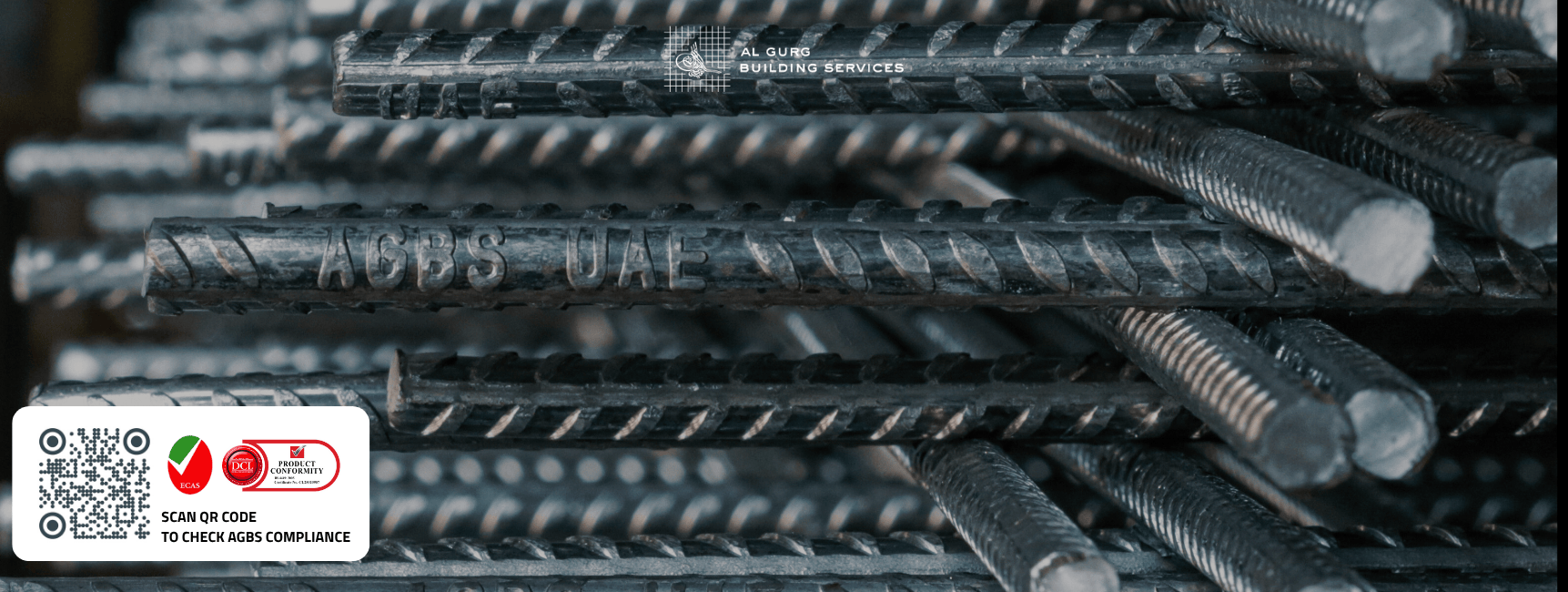
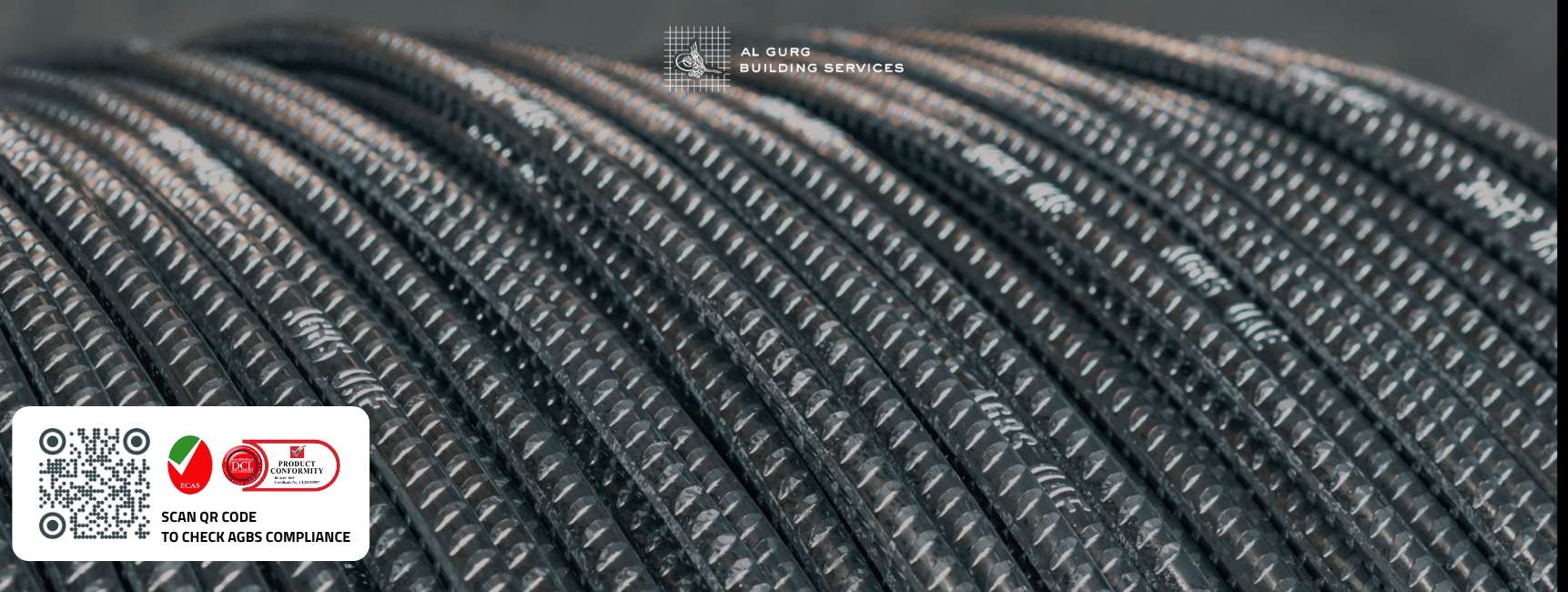
ASTM A615 covers plain and deformed carbon-steel reinforcement bars manufactured in cut lengths or coils for use in concrete reinforcement. The standard is designed to ensure consistent and predictable structural performance by defining requirements related to:

  • Minimum yield and tensile strength
  • Elongation and ductility limits
  • Rib geometry and deformation patterns
  • Surface condition and finish
  • Permissible variation in weight and dimensions

These requirements ensure that reinforcement steel bars perform as intended when used in concrete.


Grades Defined in ASTM A615

ASTM A615/A615M, recognizes four minimum yield strength grades:

  • Grade 40: 280 MPa
  • Grade 60: 420 MPa
  • Grade 80: 550 MPa
  • Grade 100: 690 Mpa

Among these, Grade 60 remains commonly used globally due to its balanced strength and deformation characteristics. The inclusion of Grade 100 expands the standard applicability to higher-load structural elements, provided it is used in appropriate engineering limits.


Mechanical Behaviour and Ductility

ASTM A615 is a carbon-steel specification, and its mechanical behavior varies by grade.

  • Grades 40 and 60 offer well-balanced strength and deformation capacity suitable for a wide range of structural applications.
  • Grade 80 provides higher yield strength with controlled elongation characteristics.
  • Grade 100 delivers very high yield strength and includes specific requirements and notes addressing its reduced margin between yield and tensile strength.
  • ASTM A615 requires a minimum tensile-to-yield strength ratio of 1.10, helping prevent sudden rupture immediately after yielding.

Understanding these mechanical characteristics is essential for engineers working in environments where load intensity, temperature variation, and serviceability requirements are critical.


Deformation and Bond Performance

Bond performance between concrete and reinforcement steel is governed largely by bar deformation. ASTM A615 defines strict criteria for:

  • Rib height
  • Rib spacing
  • Rib angle
  • Part of circumference without ribs

These controls ensure effective anchorage, consistent load transfer, and reliable crack control.


Weldability Considerations

ASTM A615 does not include provisions intended to enhance weldability. Welding when required must be approached with care and follow recognized procedures in accordance with AWS D1.4 structural welding guidelines.

  • Controlled heat input and preheat practices
  • Approved filler materials
  • Consultant approval and documented procedures

Typical Applications of ASTM A615

ASTM A615 performs effectively in projects designed under ACI 318 and similar American-based design frameworks. It is commonly used in:

  • Residential and mid-rise buildings
  • Foundations and substructures
  • General reinforcement applications with moderate ductility demands
  • Structural systems that do not rely heavily on welded reinforcement

When supplied with proper certification, testing, and traceability, ASTM A615 continues to serve as a globally trusted and structurally dependable reinforcement solution.


At Al Gurg Building Services (AGBS), we specialized in manufacturing and supplying ASTM A615 plain and deformed reinforcement bars. Our products are produced strictly following stringent mechanical, dimensional, and performance specifications outlined in the standard.

Our reinforcement steel products such as welded fabric (welded wire mesh), reinforcement steel bar (rebar), and coils are delivered with uncompromised quality, compliance, and sustainability. We offer customized services and on-time delivery to ensure the reliability of our clients is kept well.

Check our reinforcement steel products quality and access our catalogue:  Visit here

  •  To know more about our reinforcement steel products, visit www.brcarabia.com/ or  request a callback
  • Want to read about ECAS Certification?, access our latest free eBook- “ECAS Guide eBook for reinforcement steel products by AGBS.”
  • Read more informative articles from AGBS Insights (Blogs) and don’t miss our next article by following us on LinkedIn  @Al Gurg Building Services.
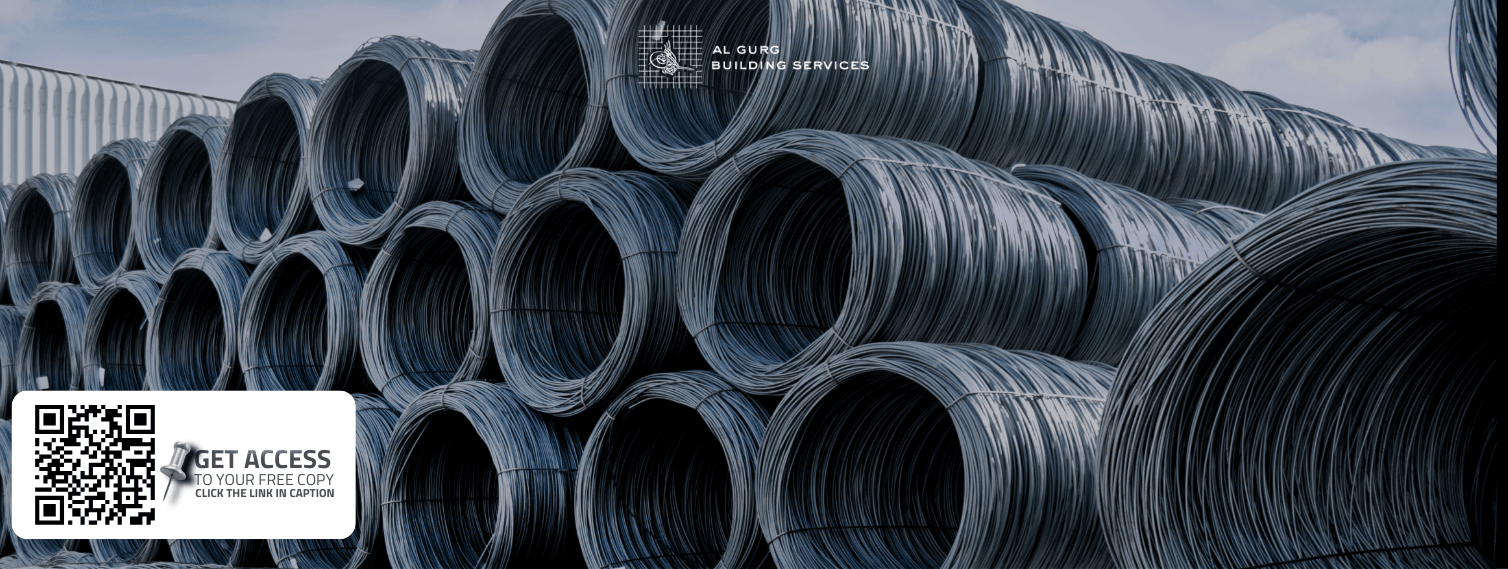
How UAE Contractors Can Optimise Steel Usage Without Compromising Quality?

In today’s competitive construction market, efficient reinforcement steel management isn’t just good practice—it’s essential. Here’s how contractors in the UAE can optimise steel usage while upholding steel quality, compliance, and project safety.


1. Optimise Rebar Design & Detailing
• Effective steel optimisation begins during the design phase:
Utilise precise structural detailing and bar bending schedules (BBS) to minimise waste and over-ordering. Clear drawings reduce on-site confusion and over-cutting.
• Leverage software or parametric optimisation tools, such as equilibrium-based optimisation, to distribute reinforcement more efficiently and reduce material usage whilst ensuring structural resilience.

2. Minimise Cutting Waste with Smart Planning
Traditional rebar lengths and poor cutting lead to waste of up to 5% or more:
• Adopt special-length ordering and lap splice optimisation, or use mechanical couplers to greatly reduce cutting and scrap.
• Prior planning ensures minimal wastage and aligns with UAE’s sustainability goals.

3. Invest in Proper Storage & Handling
Protecting steel before installation is just as important:
• Store steel at least 150 mm above ground, ideally on racks, and shield against moisture, direct sun, and contamination.
• Ensure controlled environmental conditions in the yard and during transport to maintain steel integrity.

5. Embrace Sustainable and Circular Practices
Optimisation benefits both construction and environment:
• Reuse off cuts or damaged reinforcement steel as secondary products (e.g. nails), or return to recycling streams.
• Contractors can support UAE’s sustainability initiatives by reducing carbon footprint through reduced steel usage.
Frontiers

6. Prioritise Standard Compliance & Quality
Efficiency must never compromise safety:
• Use only certified reinforcement steel that meets standards like BS 4449:2005 + A3:2016 and is traceable via batch tracking. This preserves confidence and structural integrity.
• Accurate fabrication, bending, and cutting—following procedures and pre-heating where required—prevents material damage.


Putting It All Together: A Contractor’s Checklist:
▪︎ Detailed design & optimisation: Reduces over-ordering and material waste
▪︎ Planned cutting & couplers: Minimises scrap and shortens schedules
▪︎ Controlled storage: Prevents corrosion and preserves material quality
▪︎ Precise placement & tying: Avoids rework and ensures correct load bearing
▪︎ Sustainable recycling strategies: Cuts costs and lowers environmental footprint
▪︎ Certified quality & fabrication: Maintains structural performance and compliance


Why Steel Optimisation Matters in the UAE
▪︎ Cost Savings: Small reductions in steel waste translate into significant project savings.
▪︎ Faster Timelines: Efficient reuse and planning reduce downtime and delays.
▪︎ Regulatory Confidence: Following best practices supports inspection approvals by UAE authorities.
▪︎ Enhanced Reputation: Delivering structurally sound, compliant projects strengthens client trust.


Optimising steel usage isn’t just about trimming budgets—it’s a strategic discipline. By focusing on efficient detailing, smart cutting, proper storage, and stringent quality controls, UAE building contractors can deliver lean, safe, and environmentally responsible construction.

Need help with optimising reinforcement steel usage or sourcing certified reinforcement steel products?
Reach out to our AGBS team for expert support: Contact Us Now

5 Reasons Developers Are Shifting to ECAS-Certified Rebar in the UAE

Across the UAE’s building construction sector, developers are making more deliberate choices about the building materials they use—especially when it comes to reinforcement steel. With stricter regulations and higher performance expectations, many are moving towards ECAS-certified rebar as a standard requirement.

So, what’s driving this shift? Here are five key reasons why ECAS-certified reinforcement steel has become the smarter choice for developers across the UAE:

  1. Trusted by UAE Authorities

The ECAS mark, issued by the Ministry of Industry and Advanced Technology (MoIAT), confirms a product’s compliance with UAE-approved standards for mechanical strength, chemical composition, and durability. For developers, this is more than just a label—it’s an assurance that their projects meet national safety and performance criteria.

In fact, certain leading UAE-based reinforcement steel providers have been recognized for meeting ECAS requirements. Learn more here.

  1. Essential for Regulatory Approvals

As per Cabinet Resolution No. 121 of 2023, ECAS certification is now a mandatory requirement for reinforcement steel products placed in the UAE market. Projects that source ECAS certified rebar avoid costly disruptions, delays in municipal approvals, or the risk of using non-compliant building materials.

  1. Transparent, Traceable Product Data

One of the standout features of ECAS-certified rebar is the Digital Product Passport—accessible via a QR code. It includes all relevant product details such as batch number, chemical and mechanical test results, and standard compliance.

This transparency is especially valuable for project consultants and engineers managing multiple stakeholders and milestones.

  1. Sustainable Building Materials

Beyond compliance, ECAS-certified reinforcement steel also supports sustainable construction. The required Environmental Product Declarations (EPDs), aligned with EN 15804, give developers confidence that the steel they’re using supports UAE’s green building initiatives.

  1. Long-Term Confidence and Quality

Manufacturers of ECAS-certified rebar undergo regular audits and performance evaluations to maintain certification. This commitment to quality management and operational control ensures product consistency batch after batch.

Some UAE Steel Manufactures not only meet these requirements but have also integrated ECAS standards into their long-term quality frameworks. One such example is highlighted on AGBS’s official news portal.

For developers, the move towards ECAS-certified reinforcement steel is not just about meeting a legal requirement—it’s about ensuring safety, sustainability, and smooth project execution. Partnering with suppliers who have already met ECAS standards can make that path clearer, simpler, and fully compliant.

If you’re exploring trusted suppliers for ECAS-certified reinforcement steel, it may be worth discovering more at www.brcarabia.com/

What is ECAS Mark in Reinforcement Steel Products ? – Where Must You Display It?

In the world of construction-grade steel, compliance is no longer optional, it’s the new baseline. The Emirates Conformity Assessment Scheme (ECAS) mark is the UAE’s official stamp of regulatory approval for steel reinforcement products. But what exactly is the ECAS mark and where must it be applied?


WHAT IS THE ECAS MARK?

The ECAS Mark certifies that a steel product has passed rigorous testing and inspection under UAE-approved technical standards. Once a product meets the quality, safety, and traceability requirements outlined in Cabinet Resolution No. 121 of 2023, it becomes eligible to carry this mark.

This is not just a label, it’s a legal necessity for placing carbon steel rebars and billets on the UAE market.


WHERE MUST YOU DISPLAY THE ECAS MARK?
To ensure full traceability, the ECAS mark must appear in three key areas:
> Directly on the product or bundle
> On packaging materials
> On all commercial documentation (invoices, delivery notes, etc.)

THE ECAS MARK MUST INCLUDE:
> ECAS logo
> Certificate number issued by the Ministry of Industry and Advanced Technology (MoIAT)
> Notified Body ID number
> Static QR Code – Verifies authenticity of the certificate
> Dynamic QR Code – Displays batch-level product details (grade, origin, specs)
> Rolling mark – Permanently stamped on the steel bar every ≤1.5 meters

Together, these elements form a secure digital and physical identity system for each certified batch of reinforcement steel.


WHY ARE TWO QR CODES REQUIRED?
Each certified product must feature:
> A Static QR Code that links to its ECAS certificate
> A Dynamic QR Code that reveals product-specific data such as:
> Steel grade and diameter
> Manufacturing location
> Chemical and mechanical test results
> Batch and lot number

These QR codes form part of the Digital Product Passport (DPP)—a traceability system designed to make the UAE’s construction supply chain smarter, safer, and fully auditable.


AGBS recently secured ECAS certification for our reinforcement steel products, joining a growing list of manufacturers aligning with the UAE’s regulatory vision. As the first cold drawn steel producer in the UAE to achieve the ECAS Certification we supports a broader industry shift toward digitized traceability, sustainability, and certified quality

Read more about AGBS’s certification achievement here ➝


WHAT HAPPENS IF YOU  DON’T COMPLY?
Non-compliance can have serious legal and commercial consequences, including:
> Revocation of your ECAS certificate
> Prohibition from selling products in the UAE market
> Commercial license suspension or cancellation
> Liability for damages from non-conforming materials

Authorities can also conduct unannounced audits, making real-time traceability and correct labeling non-negotiable.


MARK IT RIGHT, STAY IN THE MARKET

In today’s regulatory landscape, the ECAS mark isn’t just a formality—it’s your license to operate. It reflects your product’s conformity, your company’s commitment, and your eligibility to participate in the UAE’s future infrastructure projects.

Ensure the reinforcement steel products you are using for your prestigious project are marked, certified, and fully traceable—just like the certified reinforcement steel products from AGBS.

> ECAS Certified Reinforcement Steel Products
> Want to Learn more? Follow us on LinkedIn

Differences Between Plain Round Steel Bars & Deformed Rebars in Construction?

Steel is the backbone of modern construction, providing essential strength and stability to structures of all sizes. Among the various types of reinforcement steel products, Plain Round Steel Bars and Deformed Rebars are two primary options widely used across projects.
While they might seem similar at first glance, their differences play critical roles depending on the requirements.

In this blog, we break down the key differences between these two reinforcement options, helping you make the right choice for your construction needs.

1. Surface Characteristics
Round Steel Bars:
>
These bars have a smooth surface without any ridges or deformations.
>
Commonly referred to as “plain bars”.
>
They are typically used in lighter structural applications where high tensile bonding is not critical.

Deformed Rebars:
>
Deformed rebars have ribs, indentations, or projections rolled onto their surface during manufacturing.
>
These deformations provide high bond with concrete, significantly improving bond strength.
>
Ideal for critical applications like beams, reinforcing pre-cast concerete , columns, and slabs.

At AGBS, we manufacture high-quality ECAS and DCL Certified deformed reinforcement steel bars that meet international standards (BS 4449, ASTM A615, ISO 6935-2), ensuring superior concrete bonding and structural performance.

2. Mechanical Properties
Round Steel Bars:
>
Generally exhibit lower yield strength and lower tensile strength compared to deformed rebars.
>
Used where flexibility or lower stresses are acceptable.
Deformed Rebars:
>
Specifically manufactured to achieve higher yield strength and enhanced ductility.
>
Designed to resist greater tensile stresses and provide better reinforcement against structural loading.

3. Usage in Construction
Round Steel Bars:
>
Used in light structures, pavement slabs, railings, non-critical structures, and temporary works.
>
Suitable for situations where appearance or ease of bending and fabrication are priorities over tensile performance.
Deformed Rebars:
>
The standard reinforcement choice for Pre-cast, high-rise buildings, bridges, tunnels, foundations, and critical infrastructure.
>
Mandatory in almost all load-bearing concrete structures.

Why Choose AGBS?

At Al Gurg Building Services (AGBS), we pride ourselves on being one of the UAE’s first & leading DCL & ECAS certified manufacturers of cold drawn deformed reinforcement steel bars & coils. We also supply mild steel plain round bars.

Our commitment to quality, compliance, and customer satisfaction ensures that every bar produced supports safer, stronger, and more sustainable construction across the UAE. AGBS’s DCL and ECAS-certified deformed rebars and wide range of reinforcement steel products are commited deliver unmatched reliability and quality assurence.

📞 Contact us today and build with confidence

🏗️ Read about: Why Choose DCL Certified reinforcement steel products for Dubai projects

Why Should Contractors in Dubai Choose DCL-Certified Reinforcement Steel Products?

In Dubai’s highly regulated and fast-moving construction sector, the pressure is on contractors to deliver quality, safety, and compliance—from foundation to finish. One key decision that significantly impacts project outcomes is choosing DCL-Certified reinforcement steel products

With construction standards tightening and material traceability under scrutiny, DCL-certified steel has become a non-negotiable requirement in Dubai. So, why should contractors prioritise it?

Let’s break it down.


What is DCL Certification?

DCL (Dubai Central Laboratory) Certification, issued by the Dubai Municipality, is a conformity certification that verifies products like reinforcement steel meet international and local standards,

The certification ensures:

  • Mechanical performance such as yield strength, ductility, and elongation
  • Correct chemical composition for weldability and durability
  • Approval for use in government-regulated and private construction projects

You can learn more about this process on the Dubai Municipality’s official website


Why DCL Certified Reinforcement Steel Matters for Contractors?

✧ Guaranteed Compliance with Dubai Municipality Standards: Contractors face strict inspections and documentation checks from authorities. Using DCL-certified reinforcement steel ensures automatic alignment with local codes—helping avoid costly rejections, delays, or rework.
At AGBS, all our reinforcement steel products are DCL certified, ensuring full compliance across projects.

✧ Faster Approvals for Site Use: Authorities and consultants typically prioritise materials with clear documentation. When your steel is pre-approved with a DCL conformity certificate, the submittal process becomes faster, making project execution smoother.
Explore AGBS’s certified steel here: Reinforcement Steel by AGBS

✧ Trustworthy Quality & Performance: DCL-certified steel products go through rigorous testing, which guarantees that the reinforcement steel you use:

  • Delivers uniform strength and durability
  • Is safe for welding and high-load applications
  • Performs reliably under Dubai’s extreme climate conditions

This translates to fewer on-site issues and better long-term performance of reinforced concrete structures.

✧ Preferred for Government & Private Tenders: Major infrastructure, housing, and commercial projects in the UAE explicitly state DCL certification as a material requirement. Contractors who source certified materials are more likely to meet bid conditions and gain client trust.

AGBS is UAE’s first cold drawn reinforcement steel manufacturers to be DCL certified under BS 4449:2005 + A3:2016 standards—positioning as a top choice for serious contractors.

✧ Supports Sustainable Construction Goals (DCL + ECAS): Choosing DCL-certified steel from a dual-certified source like AGBS, which also holds ECAS (Emirates Conformity Assessment Scheme) certification, means your project aligns with UAE’s sustainable development goals.solar-powered production systems

AGBS uses solar-powered production systems, resulting in one of the lowest carbon footprints in the UAE steel industry


Choosing DCL-certified reinforcement steel isn’t just about ticking a box. It’s about:

  • Protecting your project
  • Gaining faster regulatory approvals
  • Delivering safer, stronger, and longer-lasting structures

Ready to integrate DCL-certified steel into your project?
📞 Request a callback and our team will get in touch.


Build with confidence. Choose DCL-certified reinforcement steel from AGBS.
Your trusted partner for safe, sustainable, and compliant construction solutions

What Is DCL Certification & Why Is It Crucial For Reinforcement Steel In The UAE? 

In Dubai’s fast-paced construction environment, compliance and quality assurance aren’t just best practices—they’re essential. Whether it’s a high-rise skyline project or large-scale infrastructure, every element used must meet Dubai Municipality’s strict standards. This is where DCL Certification becomes a non-negotiable benchmark—especially for one of the most critical construction materials: reinforcement steel.

In this blog, we’ll break down what DCL Certification means, why it’s vital for reinforcement steel, and how AGBS plays a key role as a trusted, certified steel manufacturer.


WHAT IS DCL CERTIFICATION?

DCL Certification is issued by the Dubai Central Laboratory Department (DCL) under the umbrella of Dubai Municipality. It is a Product Conformity Certificate that verifies whether a material complies with local and international safety, quality, and performance standards.

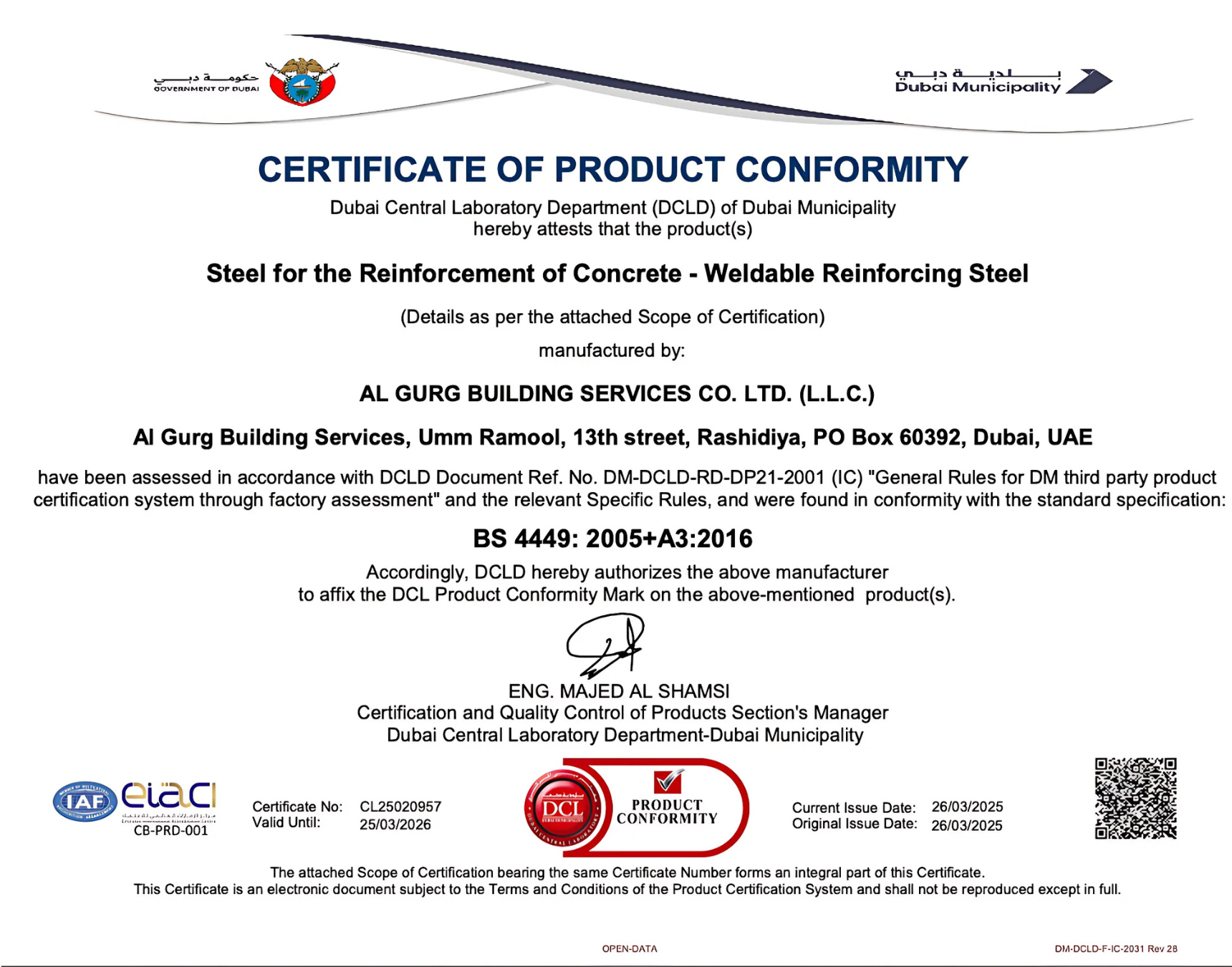
For reinforcement steel, this certification is aligned with the BS 4449:2005 + A3:2016 standard—an internationally recognised specification for weldable reinforcing steel used in concrete structures.

When a reinforcement steel product is DCL-certified, it means:

  • It has undergone rigorous lab testing and factory audits
  • It meets mechanical requirements like yield strength, elongation, and ductility
  • It aligns with chemical composition standards to ensure weldability and consistency
  • It is approved for use in regulated projects by Dubai authorities

WHY DCL CERTIFICATION MATTERS FOR REINFORCEMENT STEEL IN THE UAE?

The UAE’s construction sector is one of the most advanced and tightly regulated in the Middle East. Contractors, consultants, and developers are required to use certified materials to:

  • Meet safety codes and avoid project delays
  • Comply with Dubai Municipality’s approvals
  • Guarantee structural reliability of buildings, bridges, and infrastructure

DCL Certification for reinforcement steel helps ensure that the steel used to reinforce concrete:

  • Conforms to strict chemical and mechanical standards
  • Delivers consistent yield strength and elongation
  • Complies with local codes for safe, sustainable construction

This makes it a key requirement in public sector tenders and private sector high-spec projects across Dubai and the wider UAE.


AGBS: A DCL-CERTIFIED REINFORCEMENT STEEL MANUFACTURER

At Al Gurg Building Services (AGBS), we are proud to be a DCL-certified manufacturer of reinforcement steel bars, coils, and decoiled products in the UAE. Our products are manufactured to meet the highest standards for structural strength, safety, and compliance.

Explore our certified range of steel products here:  Reinforcement Steel by AGBS

DCL-Certified Reinforcement Steel Products – Specifications:

  • Standard: BS 4449:2005 + A3:2016
  • Grade: 500B
  • Sizes Available: 6mm, 8mm, 10mm, 12mm
  • Forms: Weldable steel bars, coils, and decoiled steel

We not only meet the quality benchmarks set by DCL, but we also operate with a strong commitment to sustainable manufacturing practices.


SUSTAINABILITY MEETS COMPLIANCE: ECAS CERTIFICATION

In addition to DCL, AGBS is also ECAS-certified—a recognition from the Emirates Authority for Standardization and Metrology. This ensures our products align with the UAE’s federal safety and environmental regulations.

Our manufacturing processes are powered by solar energy, giving us one of the lowest carbon footprints in the region’s steel industry. This makes our reinforcement steel a responsible choice for developers prioritising green building goals.


Ready to Build Safer and Smarter?

If you’re a developer, consultant, or contractor in the UAE, choosing DCL-certified reinforcement steel is essential for project success. At AGBS, we’re here to provide you with safe, certified, and sustainable steel solutions—trusted by leading builders across the region.

📌 Request a Callback to speak to our team Or explore our range of solutions: Certified Reinforcement Steel Products

Build with Compliance, Sustainability and Quality
Learn more at www.brcarabia.com/.

AGBS is Now DCL Certified

We’re proud to announce that Al Gurg Building Services (AGBS) is now DCL Certified by the Dubai Central Laboratory (DCL), a division of Dubai Municipality – for the production of reinforcement steel under the globally recognised
BS 4449:2005 + A3:2016 standard.

This milestone positions AGBS as the first cold drawn reinforcement steel producer in the UAE to achieve this certification, reinforcing our leadership in quality, compliance, and sustainable steel manufacturing.


What Does DCL Certification Mean?

The DCL Product Conformity Certification, issued by the Dubai Central Laboratory Department – Certification and Quality Control of Products Section, is one of the most trusted approvals in the UAE construction sector. It verifies that a manufacturer’s products meet all relevant local and international standards, particularly those aligned with Dubai Municipality’s regulations for safety, quality, and performance.

For reinforcement steel producers, DCL certification ensures that the steel used in infrastructure and buildings is:

  • Safe
  • Durable
  • Weldable
  • Compliant with project-specific technical requirements

AGBS’s DCL-Certified Reinforcement Steel

AGBS has acquired DCL certification for:
🔹 Products: Reinforcement steel bars, coils, and decoiled products
🔹 Standard: BS 4449:2005 + A3:2016 [ Steel for the reinforcement of concrete – Weldable reinforcing steel ]
🔹 Grade: B500B
🔹 Sizes: 6mm, 8mm, 10mm, and 12mm

With this certification, our reinforcement steel is now approved for all government, commercial, and private sector projects across the UAE.


Why This Certification Matters for Dubai Projects

DCL certification is often a mandatory requirement for construction projects across Dubai. For contractors and consultants, sourcing DCL-approved materials means:

  • Meeting regulatory compliance without compromise
  • Reducing risk of project delays due to material rejection
  • Ensuring long-term performance and safety

Now with DCL certification, AGBS’s clients can confidently integrate our steel into their builds knowing it meets the strictest technical benchmarks and sustainability goals.

Sustainability + Compliance = AGBS Advantage


What sets us apart isn’t just our certification – it’s how we earned it.

AGBS operates one of the most environmentally conscious reinforcement steel manufacturing setups in the region. Powered significantly by an in-house solar energy system, our production process has one of the lowest carbon footprints in the UAE steel industry. This achievement aligns with our ECAS Certification, further strengthening our compliance with both Emirates Authority for Standardization & Metrology and Dubai Municipality.

By combining technical compliance with sustainable operations, we deliver reinforcement steel that’s as responsible as it is reliable.


Build with Confidence – Partner with AGBS

Whether you’re planning infrastructure, towers, industrial facilities, or commercial spaces, you need certified and compliant steel you can trust.

🔗 Request a callback today to connect with our team and learn how our DCL-certified steel can meet your next project’s requirements.[Click Here]

🔗 Ready to Build Smarter, Stronger & Safer? Explore our full range of reinforcement steel products and discover why AGBS is the preferred choice for quality-driven contractors across the UAE. [ Click Here ]

🔗 Read more about how AGBS raised the bar by becoming the UAE’s first Cold Drawn Steel producer to acquire ECAS Certification,reinforcing our commitment to top-tier quality standards. [Click Here]

Types of Cold Drawn Compact Coils | Plain vs. Deformed – AGBS

In modern construction, Cold Drawn Compact Coils play a crucial role in enhancing durability. These steel coils are widely used in , spiral rings, and bar chairs in construction, making them an essential component for  For any type of  Reinforced Concrete construction

At AGBS, we provide two types of Cold Drawn Compact Coils to meet diverse project requirements:

  1. Plain Compact Coils
  2. Deformed Compact Coils

Both variants are designed to deliver superior performance, strength, and adaptability, ensuring optimal reinforcement for various construction applications.


What Are Cold Drawn Compact Coils?

Cold Drawn Compact Coils are produced by gradually reducing the diameter of plain wire rods through a cold rolling process. This process improves the tensile strength, forms the required surface pattern, and applies the needed marking. The wire is then straightened and cut to specific lengths, arranged as long and cross wires with required & acqurate spacing, and welded at the intersections using resistance welding to create a strong reinforcement mesh.

Key Features of Cold Drawn Compact Coils:

  • High tensile strength: Ideal for structural reinforcement.
  • Improved surface quality: Ensures better machinability and corrosion resistance.
  • Excellent dimensional accuracy: Provides uniformity and precision for construction needs.

Applications of Cold Drawn Compact Coils
Cold Drawn Compact Coils are extensively used in building construction due to their high strength and adaptability.
Where Are They Used?

  • Pre-Cast Concrete Manufacturing: Used in precast concrete slabs and beams to enhance strength.
  • Spiral Rings in Building Construction: Provides support and reinforcement in structural elements.
  • Bar Chairs in Construction: Helps maintain proper spacing between reinforcement steel and formwork.

These applications ensure that structures remain durable, well-supported, and resistant to heavy loads.


Types of Cold Drawn Compact Coils Available at AGBS

At AGBS, we supply two types of Cold Drawn Compact Coils, each designed to meet specific construction requirements.

1. Plain Cold Drawn Compact Coils

image

    • Smooth surface with no ridges or deformations.
    • Ideal for precision applications like spiral rings and bar chairs.
    • High flexibility makes it easy to shape and mold.
      🔗 Learn more: Plain Compact Coils


2. Deformed Compact Coils

deformed compact coil

    • Ribbed surface enhances bonding with concrete.
    • Used in reinforced concrete structures for maximum stability.
    • Higher resistance to tension and structural loads.
      🔗 Learn more: Deformed Compact Coils


Cold Drawn Compact Coils are an essential component in modern construction, offering strength, durability, and versatility for various applications.

At AGBS, we supply high-quality Plain and Deformed Cold Drawn Compact Coils, ensuring that your construction projects meet the highest industry standards.


🔗 Contact us today for premium steel reinforcement solutions tailored to your needs!
🔗 Read more about Cold Drawn Compact Coils
🔗 Get expert guidance