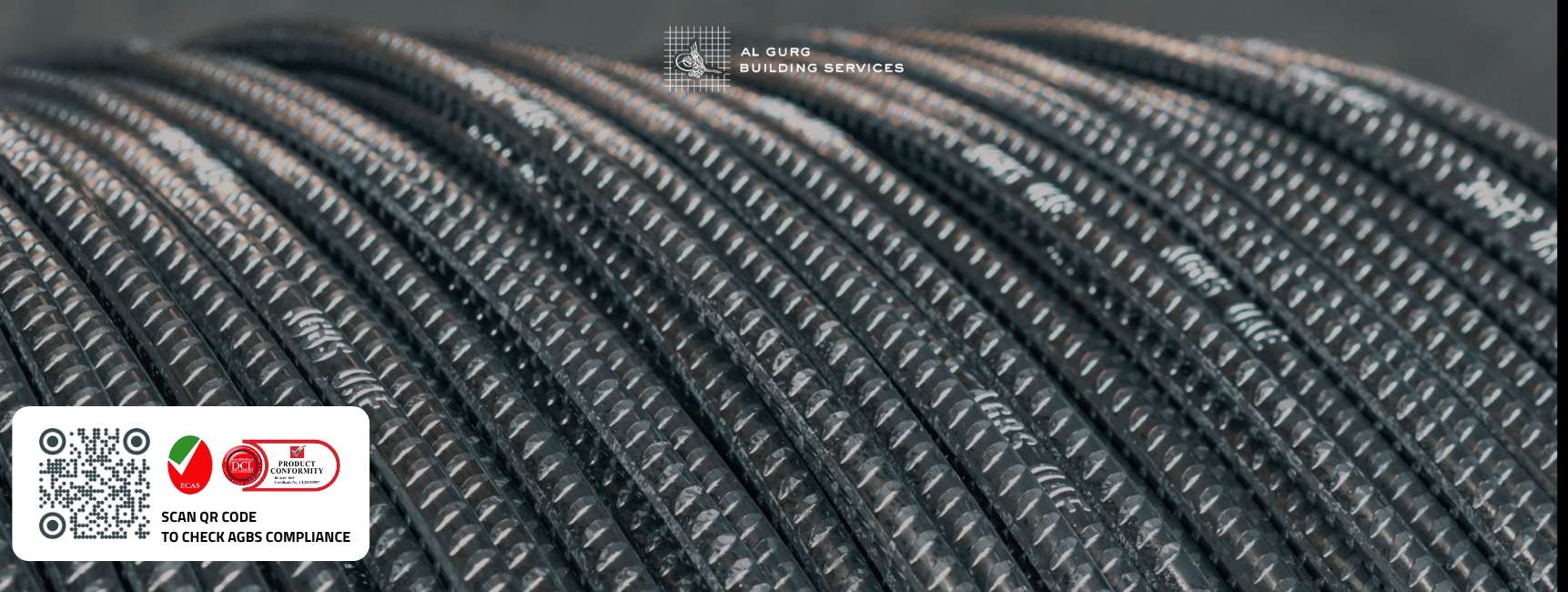
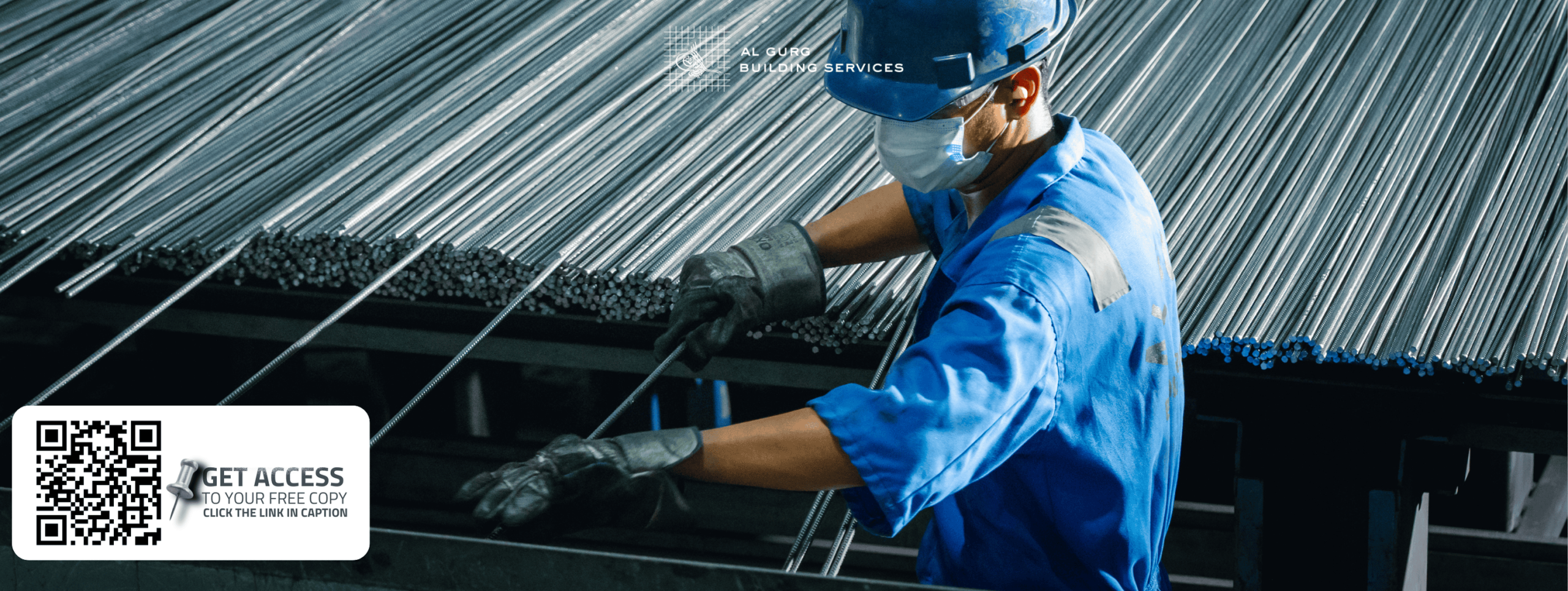
Understanding Reinforcement Steel Grade B500B | Basics Of Reinforcement Steel

Whether it is a villa, a multi-storey building, a bridge, or an industrial foundation, the safety of the structure depends heavily on the quality of the steel inside it. Among all the reinforcement grades used in the region, B500B is one of the most common and most reliable.


What Exactly Is B500B?
B500B is a high-strength steel bar used inside concrete. The “500” refers to its 500 MPa yield strength, which simply means it can handle high load before it starts to plasticaly deform. The first “B” means that this steel is used for reinforcing concrete while the later “B” represents its ductility class, meaning it is strong but also flexible enough to handle movement, temperature differences, and stress without breaking suddenly.

Under BS 4449:2005, B500B must meet the following characteristics:
• It must reach a yield strength of 500MPa (Characteristic Value)
• It must elongate at maximum force by 5% total elongation (Agt) before necking occurs.
• Its tensile strength must always be greater than its yield strength, ensuring that- its tensile-to-yield ratio is always at least 1.08.

This combination of strength and flexibility is why the UAE industry prefers it for most structural works.


Chemistry Behind B500B
For steel to be safe, weldable, and durable, its chemical composition is controlled. B500B limits the amount of carbon, sulphur, phosphorus, and other elements to ensure the bar can be welded on-site and can resist cracking. Under BS 4449:2005 Carbon is kept low (0.22% max), Sulphur and phosphorus are controlled to prevent brittleness, the carbon equivalent (CEV)-which shows how weldable the steel is-must be maximum 0.50% or lower. B500B is designed to be strong, safe, and easy to weld-all at the same time. This matters a lot in the UAE because most projects involve prefabricated steel, and on-site welding or mechanical couplers.


Specifications of B500B
• Strong enough for high-rises: The UAE’s skyline is full of towers-these structures demand steel that can take high loads. B500B’s 500 MPa strength gives engineers the safety margin they need.
• Reliable bonding with concrete: B500B bars come with controlled rib geometry (rib height, spacing, and angle) so they grip concrete tightly.
BS 4449:2005 gives exact ranges for these rib shapes to ensure proper bonding. This bond is what prevents concrete from slipping over the steel and losing strength.
• Proven fatigue resistance: The bars must survive 5 million cycles of stress in fatigue testing. This is important in bridges, metro lines, industrial plants, and structures that experience vibration

B500B is mostly used in:
• Columns, slabs, beams, and foundations in high-rise buildings
• Roads, bridges, flyovers, and tunnels
• Airport structures
• Warehouses and industrial plants
• Precast elements such as hollow-core slabs and beams
• Water tanks and retaining walls


It is a general-purpose, all-rounder steel grade suitable for most structural concrete applications. B500B reinforcement steel is trusted across the UAE because it strikes the perfect balance between strength and flexibility. It is strong enough to carry heavy loads, flexible enough to resist cracking, and weldable enough for practical on-site work.

At Al Gurg Building Services, Our team works closely with clients to provide tailored and compliant solutions that meet their project requirements without compromising quality. We are committed in manufacturing traceble, sustainable, and compliant reinforcement steel products.
Our ECAS and DCL-certified reinforcement steel products are welded fabric (welded wire mesh), reinforcement steel bars (rebars), and reinforcement steel coils.

Check our product quality and access our catalogue: Visit here
> To inquire our reinforcement steel products, visit www.brcarabia.com/. or request a callback
> Want to learn more about ECAS Certification?, access our latest free eBook-
“ECAS Guide eBook for reinforcement steel products by AGBS.”
> Read more informative articles from AGBS Insights (Blogs) and don’t miss our next article by following us on LinkedIn @Al Gurg Building Services.

Build with quality. Build with sustainability – Build with AGBS.
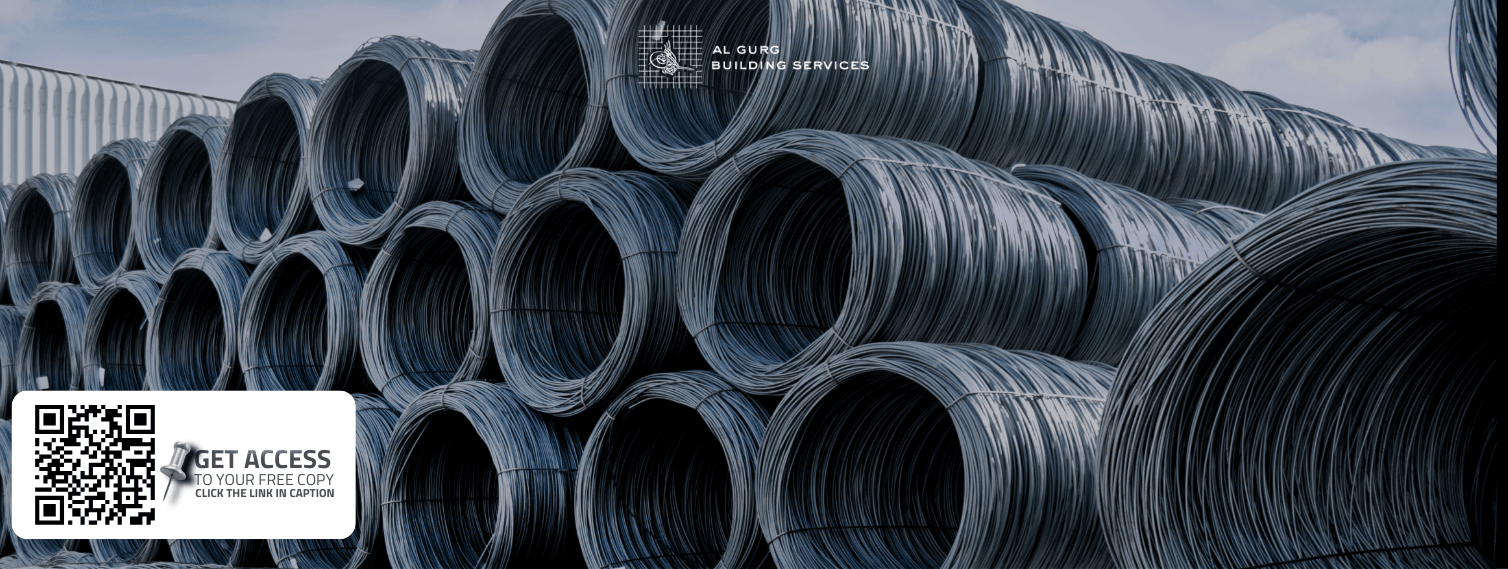
How UAE Contractors Can Optimise Steel Usage Without Compromising Quality?

In today’s competitive construction market, efficient reinforcement steel management isn’t just good practice—it’s essential. Here’s how contractors in the UAE can optimise steel usage while upholding steel quality, compliance, and project safety.


1. Optimise Rebar Design & Detailing
• Effective steel optimisation begins during the design phase:
Utilise precise structural detailing and bar bending schedules (BBS) to minimise waste and over-ordering. Clear drawings reduce on-site confusion and over-cutting.
• Leverage software or parametric optimisation tools, such as equilibrium-based optimisation, to distribute reinforcement more efficiently and reduce material usage whilst ensuring structural resilience.

2. Minimise Cutting Waste with Smart Planning
Traditional rebar lengths and poor cutting lead to waste of up to 5% or more:
• Adopt special-length ordering and lap splice optimisation, or use mechanical couplers to greatly reduce cutting and scrap.
• Prior planning ensures minimal wastage and aligns with UAE’s sustainability goals.

3. Invest in Proper Storage & Handling
Protecting steel before installation is just as important:
• Store steel at least 150 mm above ground, ideally on racks, and shield against moisture, direct sun, and contamination.
• Ensure controlled environmental conditions in the yard and during transport to maintain steel integrity.

5. Embrace Sustainable and Circular Practices
Optimisation benefits both construction and environment:
• Reuse off cuts or damaged reinforcement steel as secondary products (e.g. nails), or return to recycling streams.
• Contractors can support UAE’s sustainability initiatives by reducing carbon footprint through reduced steel usage.
Frontiers

6. Prioritise Standard Compliance & Quality
Efficiency must never compromise safety:
• Use only certified reinforcement steel that meets standards like BS 4449:2005 + A3:2016 and is traceable via batch tracking. This preserves confidence and structural integrity.
• Accurate fabrication, bending, and cutting—following procedures and pre-heating where required—prevents material damage.


Putting It All Together: A Contractor’s Checklist:
▪︎ Detailed design & optimisation: Reduces over-ordering and material waste
▪︎ Planned cutting & couplers: Minimises scrap and shortens schedules
▪︎ Controlled storage: Prevents corrosion and preserves material quality
▪︎ Precise placement & tying: Avoids rework and ensures correct load bearing
▪︎ Sustainable recycling strategies: Cuts costs and lowers environmental footprint
▪︎ Certified quality & fabrication: Maintains structural performance and compliance


Why Steel Optimisation Matters in the UAE
▪︎ Cost Savings: Small reductions in steel waste translate into significant project savings.
▪︎ Faster Timelines: Efficient reuse and planning reduce downtime and delays.
▪︎ Regulatory Confidence: Following best practices supports inspection approvals by UAE authorities.
▪︎ Enhanced Reputation: Delivering structurally sound, compliant projects strengthens client trust.


Optimising steel usage isn’t just about trimming budgets—it’s a strategic discipline. By focusing on efficient detailing, smart cutting, proper storage, and stringent quality controls, UAE building contractors can deliver lean, safe, and environmentally responsible construction.

Need help with optimising reinforcement steel usage or sourcing certified reinforcement steel products?
Reach out to our AGBS team for expert support: Contact Us Now

Is ECAS Certification Only About Safety? Here’s What You Might Be Missing

In the UAE’s fast-paced construction sector, quality and safety are often the headline priorities. But when it comes to ECAS Certification for reinforcement steel products, most professionals stop at “safety” and move on. That’s a missed opportunity. ECAS is far more than just a safety label. It represents a full-spectrum commitment to quality, compliance, traceability, sustainability, and innovation in the construction value chain.
In this blog, we bust the myth that ECAS certification is only about safety. We explore its broader benefits and why forward-thinking engineers, contractors, and project managers should see it as a strategic tool, not just a regulatory requirement.


ECAS Is Not Just About Safety – It’s About Compliance With UAE Laws

ECAS is regulated by the Ministry of Industry and Advanced Technology (MoIAT) and is legally required for reinforcement steel to be sold or used in UAE  construction projects. Without it, even the safest-looking reinforcement steel could be considered non-compliant. ECAS ensures that:

  • The reinforcement steel conforms to national and international standards such as BS 4449:2005 + A3:2016
  • The supply chain is monitored and documented
  • Products meet mechanical and chemical benchmarks for performance

It Guarantees Full Product Traceability Through QR-Coded Verification. Every ECAS-certified reinforcement steel product must come with a Digital Product Passport (DPP). This includes:

  • Batch numbers
  • Test results
  • Manufacturer details
  • Chemical composition

This helps eliminate low-quality or counterfeit steel, which can seriously affect concrete bonding and structural life. The traceability enhances accountability across suppliers and contractors.


ECAS Certification Encourages Sustainable Construction

Modern construction demands sustainable building materials. ECAS aligns with UAE’s national agenda for sustainability by enforcing:

  • Environmental compliance during reinforcement steel production
  • Documentation of energy use and carbon footprint
  • Promotion of Environment Product Declarations (EPDs)

So, certified reinforcement steel doesn’t just hold up your building—it helps future-proof your projects.


ECAS-Certified Reinforcement Steel Helps Project Approvals Move Faster

Municipalities and regulatory bodies in the UAE often prioritise or require ECAS certification during approval stages. Using certified reinforcement steel simplifies:

  • Tender evaluations
  • Design approvals
  • Site inspections and audits

With ECAS-certified reinforcement steel, you’re project-ready with fewer hurdles.


Positions You as a Quality-Focused Brand or Contractor. When your building materials meet ECAS standards, your business reputation is elevated. You are seen as:

  • A trusted supplier or contractor
  • Someone who complies with best practices
  • A player aligned with government quality agendas

In a competitive industry, this can make a difference when bidding for high-value contracts.


ECAS Is a Strategic Investment, Not a Tick-Box Exercise

If you’re viewing ECAS as just a safety formality, you’re not seeing the full picture. From legal compliance and sustainability to improved traceability and faster approvals, ECAS-certified reinforcement steel offers wide-reaching benefits. Al Gurg Building Services is proud to be the first cold drawn reinforcement steel manufacturer in the UAE to achieve ECAS certification. We’ve created a free eBook to help you understand ECAS from every angle.

  • Download the ECAS eBook: Now Gain full clarity on what ECAS certification in reinforcement steel means, why it matters, and how you can benefit from using ECAS-approved reinforcement steel.
    🔗 Access the Free ECAS Guide eBook
  •  Follow AGBS on LinkedIn: Stay up to date with the latest trends, certifications, and product innovations in UAE’s steel industry
    🔗 Follow Us on LinkedIn

5 Reasons Developers Are Shifting to ECAS-Certified Rebar in the UAE

Across the UAE’s building construction sector, developers are making more deliberate choices about the building materials they use—especially when it comes to reinforcement steel. With stricter regulations and higher performance expectations, many are moving towards ECAS-certified rebar as a standard requirement.

So, what’s driving this shift? Here are five key reasons why ECAS-certified reinforcement steel has become the smarter choice for developers across the UAE:

  1. Trusted by UAE Authorities

The ECAS mark, issued by the Ministry of Industry and Advanced Technology (MoIAT), confirms a product’s compliance with UAE-approved standards for mechanical strength, chemical composition, and durability. For developers, this is more than just a label—it’s an assurance that their projects meet national safety and performance criteria.

In fact, certain leading UAE-based reinforcement steel providers have been recognized for meeting ECAS requirements. Learn more here.

  1. Essential for Regulatory Approvals

As per Cabinet Resolution No. 121 of 2023, ECAS certification is now a mandatory requirement for reinforcement steel products placed in the UAE market. Projects that source ECAS certified rebar avoid costly disruptions, delays in municipal approvals, or the risk of using non-compliant building materials.

  1. Transparent, Traceable Product Data

One of the standout features of ECAS-certified rebar is the Digital Product Passport—accessible via a QR code. It includes all relevant product details such as batch number, chemical and mechanical test results, and standard compliance.

This transparency is especially valuable for project consultants and engineers managing multiple stakeholders and milestones.

  1. Sustainable Building Materials

Beyond compliance, ECAS-certified reinforcement steel also supports sustainable construction. The required Environmental Product Declarations (EPDs), aligned with EN 15804, give developers confidence that the steel they’re using supports UAE’s green building initiatives.

  1. Long-Term Confidence and Quality

Manufacturers of ECAS-certified rebar undergo regular audits and performance evaluations to maintain certification. This commitment to quality management and operational control ensures product consistency batch after batch.

Some UAE Steel Manufactures not only meet these requirements but have also integrated ECAS standards into their long-term quality frameworks. One such example is highlighted on AGBS’s official news portal.

For developers, the move towards ECAS-certified reinforcement steel is not just about meeting a legal requirement—it’s about ensuring safety, sustainability, and smooth project execution. Partnering with suppliers who have already met ECAS standards can make that path clearer, simpler, and fully compliant.

If you’re exploring trusted suppliers for ECAS-certified reinforcement steel, it may be worth discovering more at www.brcarabia.com/

Differences Between Plain Round Steel Bars & Deformed Rebars in Construction?

Steel is the backbone of modern construction, providing essential strength and stability to structures of all sizes. Among the various types of reinforcement steel products, Plain Round Steel Bars and Deformed Rebars are two primary options widely used across projects.
While they might seem similar at first glance, their differences play critical roles depending on the requirements.

In this blog, we break down the key differences between these two reinforcement options, helping you make the right choice for your construction needs.

1. Surface Characteristics
Round Steel Bars:
>
These bars have a smooth surface without any ridges or deformations.
>
Commonly referred to as “plain bars”.
>
They are typically used in lighter structural applications where high tensile bonding is not critical.

Deformed Rebars:
>
Deformed rebars have ribs, indentations, or projections rolled onto their surface during manufacturing.
>
These deformations provide high bond with concrete, significantly improving bond strength.
>
Ideal for critical applications like beams, reinforcing pre-cast concerete , columns, and slabs.

At AGBS, we manufacture high-quality ECAS and DCL Certified deformed reinforcement steel bars that meet international standards (BS 4449, ASTM A615, ISO 6935-2), ensuring superior concrete bonding and structural performance.

2. Mechanical Properties
Round Steel Bars:
>
Generally exhibit lower yield strength and lower tensile strength compared to deformed rebars.
>
Used where flexibility or lower stresses are acceptable.
Deformed Rebars:
>
Specifically manufactured to achieve higher yield strength and enhanced ductility.
>
Designed to resist greater tensile stresses and provide better reinforcement against structural loading.

3. Usage in Construction
Round Steel Bars:
>
Used in light structures, pavement slabs, railings, non-critical structures, and temporary works.
>
Suitable for situations where appearance or ease of bending and fabrication are priorities over tensile performance.
Deformed Rebars:
>
The standard reinforcement choice for Pre-cast, high-rise buildings, bridges, tunnels, foundations, and critical infrastructure.
>
Mandatory in almost all load-bearing concrete structures.

Why Choose AGBS?

At Al Gurg Building Services (AGBS), we pride ourselves on being one of the UAE’s first & leading DCL & ECAS certified manufacturers of cold drawn deformed reinforcement steel bars & coils. We also supply mild steel plain round bars.

Our commitment to quality, compliance, and customer satisfaction ensures that every bar produced supports safer, stronger, and more sustainable construction across the UAE. AGBS’s DCL and ECAS-certified deformed rebars and wide range of reinforcement steel products are commited deliver unmatched reliability and quality assurence.

📞 Contact us today and build with confidence

🏗️ Read about: Why Choose DCL Certified reinforcement steel products for Dubai projects

What Is DCL Certification & Why Is It Crucial For Reinforcement Steel In The UAE? 

In Dubai’s fast-paced construction environment, compliance and quality assurance aren’t just best practices—they’re essential. Whether it’s a high-rise skyline project or large-scale infrastructure, every element used must meet Dubai Municipality’s strict standards. This is where DCL Certification becomes a non-negotiable benchmark—especially for one of the most critical construction materials: reinforcement steel.

In this blog, we’ll break down what DCL Certification means, why it’s vital for reinforcement steel, and how AGBS plays a key role as a trusted, certified steel manufacturer.


WHAT IS DCL CERTIFICATION?

DCL Certification is issued by the Dubai Central Laboratory Department (DCL) under the umbrella of Dubai Municipality. It is a Product Conformity Certificate that verifies whether a material complies with local and international safety, quality, and performance standards.

For reinforcement steel, this certification is aligned with the BS 4449:2005 + A3:2016 standard—an internationally recognised specification for weldable reinforcing steel used in concrete structures.

When a reinforcement steel product is DCL-certified, it means:

  • It has undergone rigorous lab testing and factory audits
  • It meets mechanical requirements like yield strength, elongation, and ductility
  • It aligns with chemical composition standards to ensure weldability and consistency
  • It is approved for use in regulated projects by Dubai authorities

WHY DCL CERTIFICATION MATTERS FOR REINFORCEMENT STEEL IN THE UAE?

The UAE’s construction sector is one of the most advanced and tightly regulated in the Middle East. Contractors, consultants, and developers are required to use certified materials to:

  • Meet safety codes and avoid project delays
  • Comply with Dubai Municipality’s approvals
  • Guarantee structural reliability of buildings, bridges, and infrastructure

DCL Certification for reinforcement steel helps ensure that the steel used to reinforce concrete:

  • Conforms to strict chemical and mechanical standards
  • Delivers consistent yield strength and elongation
  • Complies with local codes for safe, sustainable construction

This makes it a key requirement in public sector tenders and private sector high-spec projects across Dubai and the wider UAE.


AGBS: A DCL-CERTIFIED REINFORCEMENT STEEL MANUFACTURER

At Al Gurg Building Services (AGBS), we are proud to be a DCL-certified manufacturer of reinforcement steel bars, coils, and decoiled products in the UAE. Our products are manufactured to meet the highest standards for structural strength, safety, and compliance.

Explore our certified range of steel products here:  Reinforcement Steel by AGBS

DCL-Certified Reinforcement Steel Products – Specifications:

  • Standard: BS 4449:2005 + A3:2016
  • Grade: 500B
  • Sizes Available: 6mm, 8mm, 10mm, 12mm
  • Forms: Weldable steel bars, coils, and decoiled steel

We not only meet the quality benchmarks set by DCL, but we also operate with a strong commitment to sustainable manufacturing practices.


SUSTAINABILITY MEETS COMPLIANCE: ECAS CERTIFICATION

In addition to DCL, AGBS is also ECAS-certified—a recognition from the Emirates Authority for Standardization and Metrology. This ensures our products align with the UAE’s federal safety and environmental regulations.

Our manufacturing processes are powered by solar energy, giving us one of the lowest carbon footprints in the region’s steel industry. This makes our reinforcement steel a responsible choice for developers prioritising green building goals.


Ready to Build Safer and Smarter?

If you’re a developer, consultant, or contractor in the UAE, choosing DCL-certified reinforcement steel is essential for project success. At AGBS, we’re here to provide you with safe, certified, and sustainable steel solutions—trusted by leading builders across the region.

📌 Request a Callback to speak to our team Or explore our range of solutions: Certified Reinforcement Steel Products

Build with Compliance, Sustainability and Quality
Learn more at www.brcarabia.com/.

Types of Cold Drawn Compact Coils | Plain vs. Deformed – AGBS

In modern construction, Cold Drawn Compact Coils play a crucial role in enhancing durability. These steel coils are widely used in , spiral rings, and bar chairs in construction, making them an essential component for  For any type of  Reinforced Concrete construction

At AGBS, we provide two types of Cold Drawn Compact Coils to meet diverse project requirements:

  1. Plain Compact Coils
  2. Deformed Compact Coils

Both variants are designed to deliver superior performance, strength, and adaptability, ensuring optimal reinforcement for various construction applications.


What Are Cold Drawn Compact Coils?

Cold Drawn Compact Coils are produced by gradually reducing the diameter of plain wire rods through a cold rolling process. This process improves the tensile strength, forms the required surface pattern, and applies the needed marking. The wire is then straightened and cut to specific lengths, arranged as long and cross wires with required & acqurate spacing, and welded at the intersections using resistance welding to create a strong reinforcement mesh.

Key Features of Cold Drawn Compact Coils:

  • High tensile strength: Ideal for structural reinforcement.
  • Improved surface quality: Ensures better machinability and corrosion resistance.
  • Excellent dimensional accuracy: Provides uniformity and precision for construction needs.

Applications of Cold Drawn Compact Coils
Cold Drawn Compact Coils are extensively used in building construction due to their high strength and adaptability.
Where Are They Used?

  • Pre-Cast Concrete Manufacturing: Used in precast concrete slabs and beams to enhance strength.
  • Spiral Rings in Building Construction: Provides support and reinforcement in structural elements.
  • Bar Chairs in Construction: Helps maintain proper spacing between reinforcement steel and formwork.

These applications ensure that structures remain durable, well-supported, and resistant to heavy loads.


Types of Cold Drawn Compact Coils Available at AGBS

At AGBS, we supply two types of Cold Drawn Compact Coils, each designed to meet specific construction requirements.

1. Plain Cold Drawn Compact Coils

image

    • Smooth surface with no ridges or deformations.
    • Ideal for precision applications like spiral rings and bar chairs.
    • High flexibility makes it easy to shape and mold.
      🔗 Learn more: Plain Compact Coils


2. Deformed Compact Coils

deformed compact coil

    • Ribbed surface enhances bonding with concrete.
    • Used in reinforced concrete structures for maximum stability.
    • Higher resistance to tension and structural loads.
      🔗 Learn more: Deformed Compact Coils


Cold Drawn Compact Coils are an essential component in modern construction, offering strength, durability, and versatility for various applications.

At AGBS, we supply high-quality Plain and Deformed Cold Drawn Compact Coils, ensuring that your construction projects meet the highest industry standards.


🔗 Contact us today for premium steel reinforcement solutions tailored to your needs!
🔗 Read more about Cold Drawn Compact Coils
🔗 Get expert guidance 

How Reinforcement Steel Enhances Durability in UAE Construction?

The UAE’s extreme environmental challenges, such as intense heat and corrosive coastal conditions, demand highly durable construction materials. The stability and lifespan of buildings depend largely on the quality of materials used. Reinforcement steel plays a vital role in ensuring structures withstand these harsh environments.


WHAT IS A REINFORCEMENT STEEL?
Reinforcement steel is essential in building construction, providing tensile strength to concrete, which otherwise excels only in compressive strength. The use of reinforcement steel ensures the durability of concrete structures. Low-quality steel, however, can compromise even the best-prepared concrete. Reinforcement steel supports foundations, beams, columns, and slabs, playing a key role in structural integrity.
AGBS offers reinforcement steel tailored to meet specific project needs, ensuring long-lasting durability.

WHY IS REINFORCEMENT STEEL IMPORTANT IN THE UAE?
> Extreme Temperatures: The UAE’s heat causes building materials to expand and contract. Reinforcement steel reduces the risk of cracking, maintaining stability.
> Coastal Salinity: Projects near Dubai and Abu Dhabi face high salinity levels, leading to corrosion. Corrosion-resistant options like galvanized or epoxy-coated steel ensure durability

THE ROLE OF STEEL MESH IN CONCRETE REINFORCEMENT
Steel mesh enhances the tensile strength of concrete, preventing cracks that weaken structures. Wire mesh reinforcement is widely used for large housing projects that use pre-cast elements to accelerate construction.


TYPES OF REINFORCEMENT STELL:
At AGBS, we provide a range of reinforcement steel products designed to meet the unique needs of various construction projects.
Let’s break down the types we offer and where they are typically used:

  1. Reinforcement Welded Wire Mesh: Welded Wire Mesh is a prefabricated grid of steel wires welded at their intersections, designed to provide tensile strength and increase the durability of concrete structures. It’s commonly used in various structural elements like slabs, walls, and mezzanines to prevent cracking and ensure long-term stability.
    > Standard Wire Mesh: Manufactured in accordance with ISO, BS, and AS industry standards, these meshes are typically used in general reinforcement applications, such as floors, walls, and other concrete elements. They offer consistency in size and performance, making them a reliable choice for most standard construction projects.
    > Customized Wire Mesh: When projects require unique structural solutions, customized wire mesh can be tailored to specific reinforcement needs. These meshes are ideal for complex structures like bridges and large housing projects, offering both flexibility and cost-efficiency.
  2. Cold Drawn Compact Coils: These coils are strengthened and refined through a cold drawing process, which is used in concrete reinforcement, pre-cast manufacturing and more. We supply both plain and deformed compact coils to meet diverse construction needs.
    > Deformed Compact Coils: These coils have ridges or deformations on their surface, making them ideal for bonding strongly with concrete. The flexible nature of deformed compact coils allows them to be cut and shaped on-site, which is particularly useful for large infrastructure projects like bridges, tunnels, and industrial constructions where varied reinforcement lengths are required.
    > Plain Compact Coils: Without surface ridges, plain compact coils are used in situations where the bond with concrete is less critical but where high tensile strength is still necessary. These are typically found in lightweight structures, non-load-bearing walls, and decorative precast elements.
  3. Cold Drawn Steel Bars: The cold drawing process improves the mechanical properties of the steel bars by increasing its strength. These bars are known for their enhanced tensile and yield strength, as well as durability,
    > Cold Drawn Deformed Steel Bars: These straight, rigid bars feature surface ridges that create a strong bond with concrete, making them an ideal choice for load-bearing applications. Deformed steel bars are specifically designed to meet structural requirements in columns, beams, and foundations for large-scale construction projects. Their ridged surface enhances grip and tension with concrete, ensuring stability and strength in critical structural components.

MAJOR FACTORS TO CONSIDER WHEN SELECTING REINFORCEMENT STEEL
Selecting the right reinforcement steel for your project depends on several key factors:
> Environmental Conditions: The UAE’s harsh climate, especially in coastal areas, often demands corrosion-resistant steel. We offer solutions like epoxy-coated and galvanized rebars, specifically designed to enhance steel’s resistance to corrosion, ensuring long-lasting durability in challenging environments.
> Project Type: Whether your project is residential, commercial, or industrial, the type of reinforcement steel required will vary.
At AGBS, we provide a range of steel products suitable for both large-scale and smaller projects, ensuring you have the right solution for any construction need.
> Load Requirements: Larger or more complex structures demand reinforcement steel that can withstand higher loads and stresses. In contrast, non-load-bearing walls or lighter structures may require less intensive reinforcement.
Our experts can assist you with your project’s specific load requirements and find the ideal reinforcement solution.


Consulting with experts helps you choose the right reinforcement steel that enhances the durability and longevity of your construction project, especially under the challenging conditions found in the UAE.
With a clear understanding of the various types of reinforcement steel and their specific benefits, you can confidently choose the materials that will ensure your project meets the highest standards of safety and performance.
Contact our expert team at AGBS, to assist you with selecting the best reinforcement steel for your next project.