
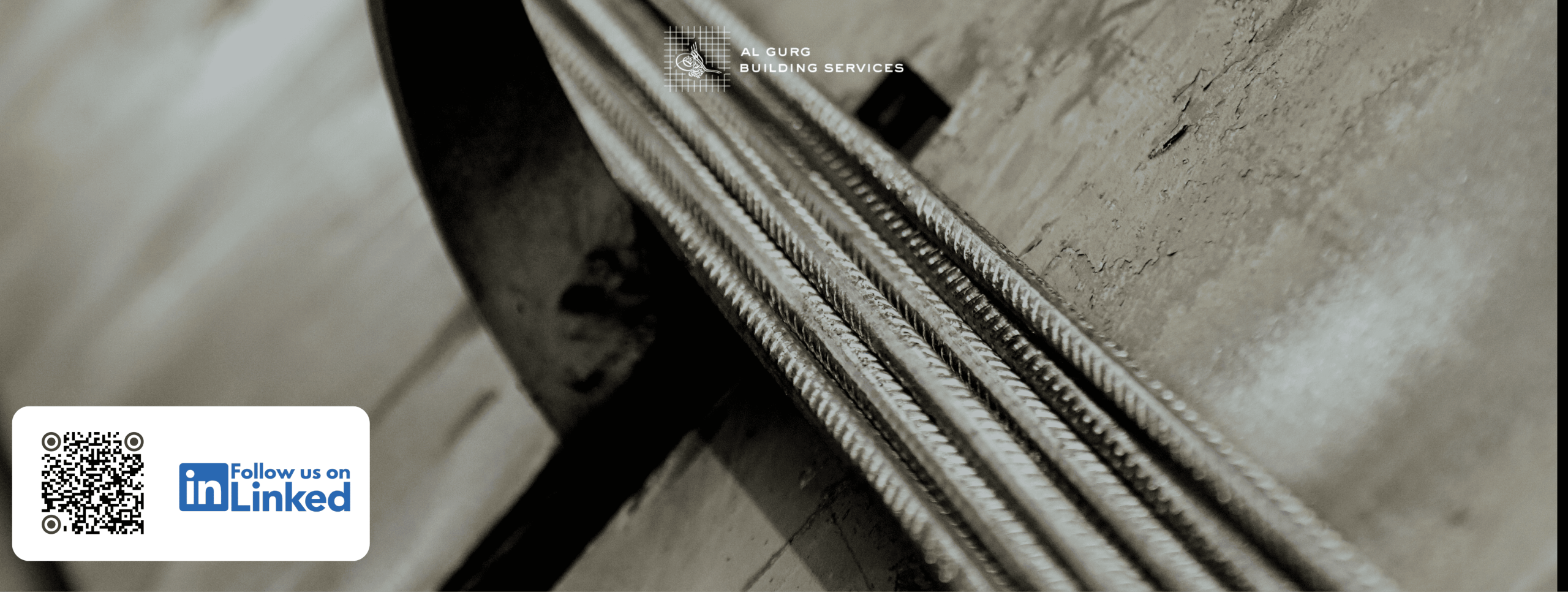
Reinforcement steel is a fundamental component of reinforced concrete structures, directly influencing strength, load transfer, crack control, and long-term structural performance. Among globally recognised specifications, ASTM A615 is one of the most widely adopted standards for plain and deformed carbon-steel reinforcement bars, used extensively across infrastructure, residential, and commercial construction worldwide.
ASTM A615 remains a reliable and well-established reinforcement standard. However, a clear understanding of its mechanical behavior, deformation requirements, and application boundaries is essential-particularly in technically demanding environments such as the UAE.
What ASTM A615 Specifies?
ASTM A615 covers plain and deformed carbon-steel reinforcement bars manufactured in cut lengths or coils for use in concrete reinforcement. The standard is designed to ensure consistent and predictable structural performance by defining requirements related to:
- Minimum yield and tensile strength
- Elongation and ductility limits
- Rib geometry and deformation patterns
- Surface condition and finish
- Permissible variation in weight and dimensions
These requirements ensure that reinforcement steel bars perform as intended when used in concrete.
Grades Defined in ASTM A615
ASTM A615/A615M, recognizes four minimum yield strength grades:
- Grade 40: 280 MPa
- Grade 60: 420 MPa
- Grade 80: 550 MPa
- Grade 100: 690 Mpa
Among these, Grade 60 remains commonly used globally due to its balanced strength and deformation characteristics. The inclusion of Grade 100 expands the standard applicability to higher-load structural elements, provided it is used in appropriate engineering limits.
Mechanical Behaviour and Ductility
ASTM A615 is a carbon-steel specification, and its mechanical behavior varies by grade.
- Grades 40 and 60 offer well-balanced strength and deformation capacity suitable for a wide range of structural applications.
- Grade 80 provides higher yield strength with controlled elongation characteristics.
- Grade 100 delivers very high yield strength and includes specific requirements and notes addressing its reduced margin between yield and tensile strength.
- ASTM A615 requires a minimum tensile-to-yield strength ratio of 1.10, helping prevent sudden rupture immediately after yielding.
Understanding these mechanical characteristics is essential for engineers working in environments where load intensity, temperature variation, and serviceability requirements are critical.
Deformation and Bond Performance
Bond performance between concrete and reinforcement steel is governed largely by bar deformation. ASTM A615 defines strict criteria for:
- Rib height
- Rib spacing
- Rib angle
- Part of circumference without ribs
These controls ensure effective anchorage, consistent load transfer, and reliable crack control.
Weldability Considerations
ASTM A615 does not include provisions intended to enhance weldability. Welding when required must be approached with care and follow recognized procedures in accordance with AWS D1.4 structural welding guidelines.
- Controlled heat input and preheat practices
- Approved filler materials
- Consultant approval and documented procedures
Typical Applications of ASTM A615
ASTM A615 performs effectively in projects designed under ACI 318 and similar American-based design frameworks. It is commonly used in:
- Residential and mid-rise buildings
- Foundations and substructures
- General reinforcement applications with moderate ductility demands
- Structural systems that do not rely heavily on welded reinforcement
When supplied with proper certification, testing, and traceability, ASTM A615 continues to serve as a globally trusted and structurally dependable reinforcement solution.
At Al Gurg Building Services (AGBS), we specialized in manufacturing and supplying ASTM A615 plain and deformed reinforcement bars. Our products are produced strictly following stringent mechanical, dimensional, and performance specifications outlined in the standard.
Our reinforcement steel products such as welded fabric (welded wire mesh), reinforcement steel bar (rebar), and coils are delivered with uncompromised quality, compliance, and sustainability. We offer customized services and on-time delivery to ensure the reliability of our clients is kept well.
Check our reinforcement steel products quality and access our catalogue: Visit here
- To know more about our reinforcement steel products, visit www.brcarabia.com/ or request a callback
- Want to read about ECAS Certification?, access our latest free eBook- “ECAS Guide eBook for reinforcement steel products by AGBS.”
- Read more informative articles from AGBS Insights (Blogs) and don’t miss our next article by following us on LinkedIn @Al Gurg Building Services.