Surface Rust (Corrosion) and Structural Implications of Reinforcement Steel

Reinforcement steel plays a critical role in reinforced concrete structures, directly influencing strength, load transfer, crack control, bond performance, and long-term durability. One commonly encountered condition during storage, handling, or prior to placement is surface rust on reinforcement steel. While often viewed as a defect, surface rust must be evaluated based on its structural relevance, rather than appearance alone.

Understanding the mechanism of corrosion, its effect on mechanical properties, and its impact on bond and durability is essential for making technically sound decisions on reinforcement usability-particularly in demanding construction environments.


Formation of Surface Rust on Reinforcing Steel

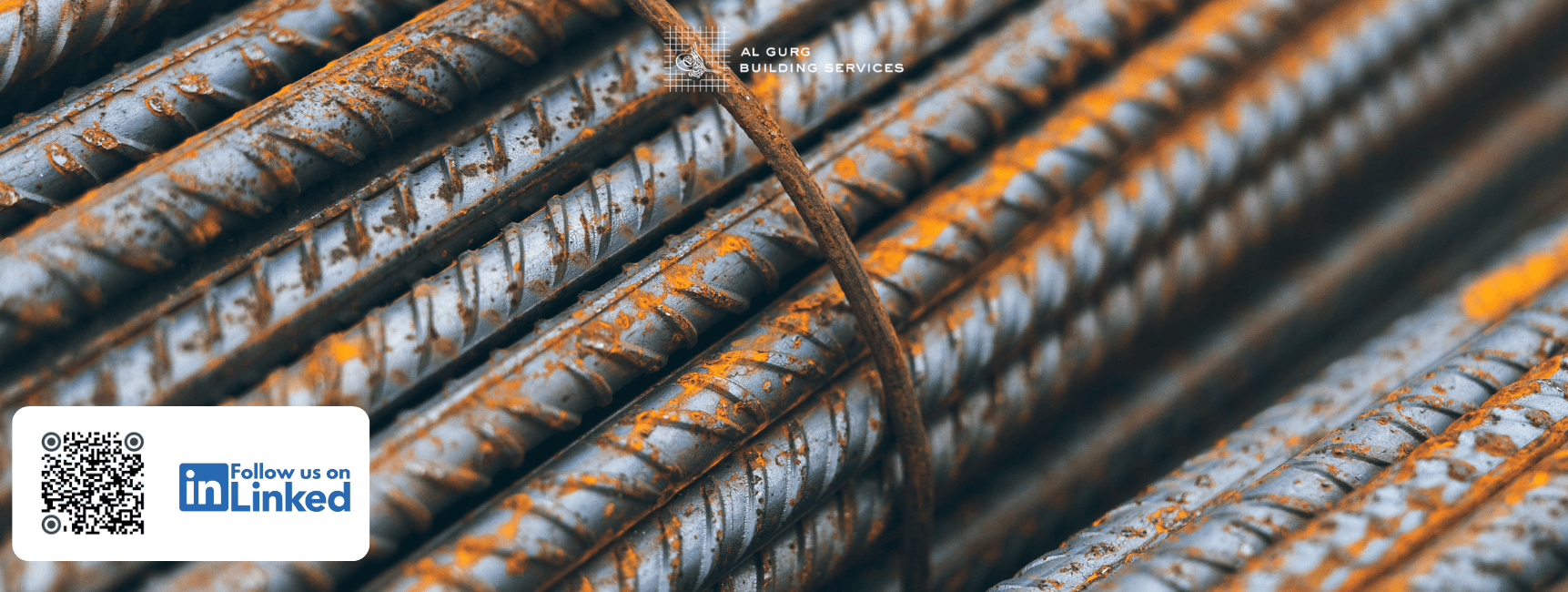
Surface rust forms when iron undergoes atmospheric corrosion in the presence of moisture. The rate and nature of this process are strongly influenced by environmental factors such as humidity, temperature, and pollution levels.

In oxygen-rich environments, corrosion typically produces red rust, which is the most commonly observed form on exposed reinforcement. In contrast, oxygen-poor conditions result in the formation of black rust. When chlorides are present, corrosion behaviour changes significantly. Rather than spreading uniformly, corrosion becomes localized, leading to pitting corrosion, which penetrates deeper into the steel and poses a higher structural risk.Shape


Effect of Corrosion on Mechanical Properties

The mechanical performance of reinforcing steel is closely tied to its cross-sectional area. When corrosion is light and uniformly distributed, its impact on mechanical properties is minimal. In such cases, the underlying steel retains its original strength, ductility, and toughness, provided there is no measurable reduction in bar diameter.

As corrosion progresses to a significant or advanced level, its effects become structurally relevant. Loss of cross-sectional area directly reduces the steel’s tensile strength and load-carrying capacity.

Corrosion also leads to reduced ductility, making the steel more brittle and less capable of undergoing deformation before failure. In chloride-rich environments, pitting corrosion further accelerates crack initiation and significantly reduces the life of reinforcement steel.


Effect of Rust on Bond Strength

Bond strength between concrete and reinforcement steel is fundamental to the performance of reinforced concrete structures. Light, uniform surface rust generally has little negative effect on bond strength and may even enhance bonding by increasing surface roughness and improving mechanical interlock.

As corrosion advances to a moderate level, the expanding rust layer generates internal pressure at the steel–concrete interface. This can lead to microcracking in the surrounding concrete and gradually weakening the bond.

In advanced corrosion stages, particularly where localized pitting occurs, bond performance deteriorates rapidly. Pitting reduces the effective bar diameter and weakens both the steel and its bond area. Once concrete cover cracking occurs or when corrosion products become flaky and non-adherent, bond strength drops sharply.


Effect of Rust on Durability

Reinforcement steel produced in good-quality, alkaline concrete (pH around 12) remains passive and corrodes very slowly, typically around 0.1 micrometers per year. This passive condition is maintained by the alkaline environment provided by the concrete.

Passivity can be disrupted when chlorides penetrate the concrete or when carbonation lowers the pH at the steel surface. However, in good-quality concrete where passive conditions are preserved, the presence of light surface rust on reinforcement does not increase corrosion rates and does not compromise long-term durability.


Acceptable Rust on Reinforcement

Most international standards do not define a strict quantitative limit for acceptable rust on reinforcement, as corrosion appearance alone does not reliably indicate structural performance. Instead, assessment is based on the principle of fitness for purpose.

According to CIRIA Report 147, acceptability of rust on reinforcement should be evaluated using five key criteria:

  • Bond strength with concrete
  • Remaining cross-sectional area of the bar
  • Impact on long-term durability
  • Mechanical acceptability of corrosion-related damage
  • Effect on appearance of exposed concrete surfaces

CIRIA Assessment Guidance
CIRIA recommends a structured evaluation approach to assess these criteria.

  • Reinforcement should be inspected for loose rust by rubbing the surface with a gloved hand. The presence of pitting should be carefully examined, as it indicates localized corrosion.
  • Loss of cross-section can be assessed by measuring weight reduction per unit length, while chemical contamination should be identified through laboratory analysis when required.
  • A final visual inspection confirms whether corrosion has resulted in mechanical damage affecting the reinforcement’s structural performance.

Remedial Treatment-CIRIA Recommendations
Where rust or scale is clean and adherent, no remedial treatment is required

  • If rust or scale is clean but loose, mechanical treatment or wet abrasive cleaning may be applied, followed by water-jet washing. In cases where rust or scale is contaminated, mechanical treatment is not recommended. Wet abrasive cleaning may be used, but washing should not be carried out.

At Al Gurg Building Services (AGBS), we specialized in manufacturing and supplying quality and compliant reinforcement steel products. Our products are produced strictly following stringent mechanical, dimensional, and performance specifications outlined in the standard.

Our reinforcement steel products such as welded fabric (welded wire mesh), reinforcement steel bar (rebar), and coils are delivered with uncompromised quality, compliance, and sustainability. We offer customized services and on-time delivery to ensure the reliability of our clients is kept well. Check our reinforcement steel products quality and access our catalogue:  Visit here

Understanding ASTM A615 Reinforcement Steel: Basics of Reinforcement Steel

Reinforcement steel is a fundamental component of reinforced concrete structures, directly influencing strength, load transfer, crack control, and long-term structural performance. Among globally recognised specifications, ASTM A615 is one of the most widely adopted standards for plain and deformed carbon-steel reinforcement bars, used extensively across infrastructure, residential, and commercial construction worldwide.

ASTM A615 remains a reliable and well-established reinforcement standard. However, a clear understanding of its mechanical behavior, deformation requirements, and application boundaries is essential-particularly in technically demanding environments such as the UAE.


What ASTM A615 Specifies?

ASTM A615 covers plain and deformed carbon-steel reinforcement bars manufactured in cut lengths or coils for use in concrete reinforcement. The standard is designed to ensure consistent and predictable structural performance by defining requirements related to:

  • Minimum yield and tensile strength
  • Elongation and ductility limits
  • Rib geometry and deformation patterns
  • Surface condition and finish
  • Permissible variation in weight and dimensions

These requirements ensure that reinforcement steel bars perform as intended when used in concrete.


Grades Defined in ASTM A615

ASTM A615/A615M, recognizes four minimum yield strength grades:

  • Grade 40: 280 MPa
  • Grade 60: 420 MPa
  • Grade 80: 550 MPa
  • Grade 100: 690 Mpa

Among these, Grade 60 remains commonly used globally due to its balanced strength and deformation characteristics. The inclusion of Grade 100 expands the standard applicability to higher-load structural elements, provided it is used in appropriate engineering limits.


Mechanical Behaviour and Ductility

ASTM A615 is a carbon-steel specification, and its mechanical behavior varies by grade.

  • Grades 40 and 60 offer well-balanced strength and deformation capacity suitable for a wide range of structural applications.
  • Grade 80 provides higher yield strength with controlled elongation characteristics.
  • Grade 100 delivers very high yield strength and includes specific requirements and notes addressing its reduced margin between yield and tensile strength.
  • ASTM A615 requires a minimum tensile-to-yield strength ratio of 1.10, helping prevent sudden rupture immediately after yielding.

Understanding these mechanical characteristics is essential for engineers working in environments where load intensity, temperature variation, and serviceability requirements are critical.


Deformation and Bond Performance

Bond performance between concrete and reinforcement steel is governed largely by bar deformation. ASTM A615 defines strict criteria for:

  • Rib height
  • Rib spacing
  • Rib angle
  • Part of circumference without ribs

These controls ensure effective anchorage, consistent load transfer, and reliable crack control.


Weldability Considerations

ASTM A615 does not include provisions intended to enhance weldability. Welding when required must be approached with care and follow recognized procedures in accordance with AWS D1.4 structural welding guidelines.

  • Controlled heat input and preheat practices
  • Approved filler materials
  • Consultant approval and documented procedures

Typical Applications of ASTM A615

ASTM A615 performs effectively in projects designed under ACI 318 and similar American-based design frameworks. It is commonly used in:

  • Residential and mid-rise buildings
  • Foundations and substructures
  • General reinforcement applications with moderate ductility demands
  • Structural systems that do not rely heavily on welded reinforcement

When supplied with proper certification, testing, and traceability, ASTM A615 continues to serve as a globally trusted and structurally dependable reinforcement solution.


At Al Gurg Building Services (AGBS), we specialized in manufacturing and supplying ASTM A615 plain and deformed reinforcement bars. Our products are produced strictly following stringent mechanical, dimensional, and performance specifications outlined in the standard.

Our reinforcement steel products such as welded fabric (welded wire mesh), reinforcement steel bar (rebar), and coils are delivered with uncompromised quality, compliance, and sustainability. We offer customized services and on-time delivery to ensure the reliability of our clients is kept well.

Check our reinforcement steel products quality and access our catalogue:  Visit here

  •  To know more about our reinforcement steel products, visit www.brcarabia.com/ or  request a callback
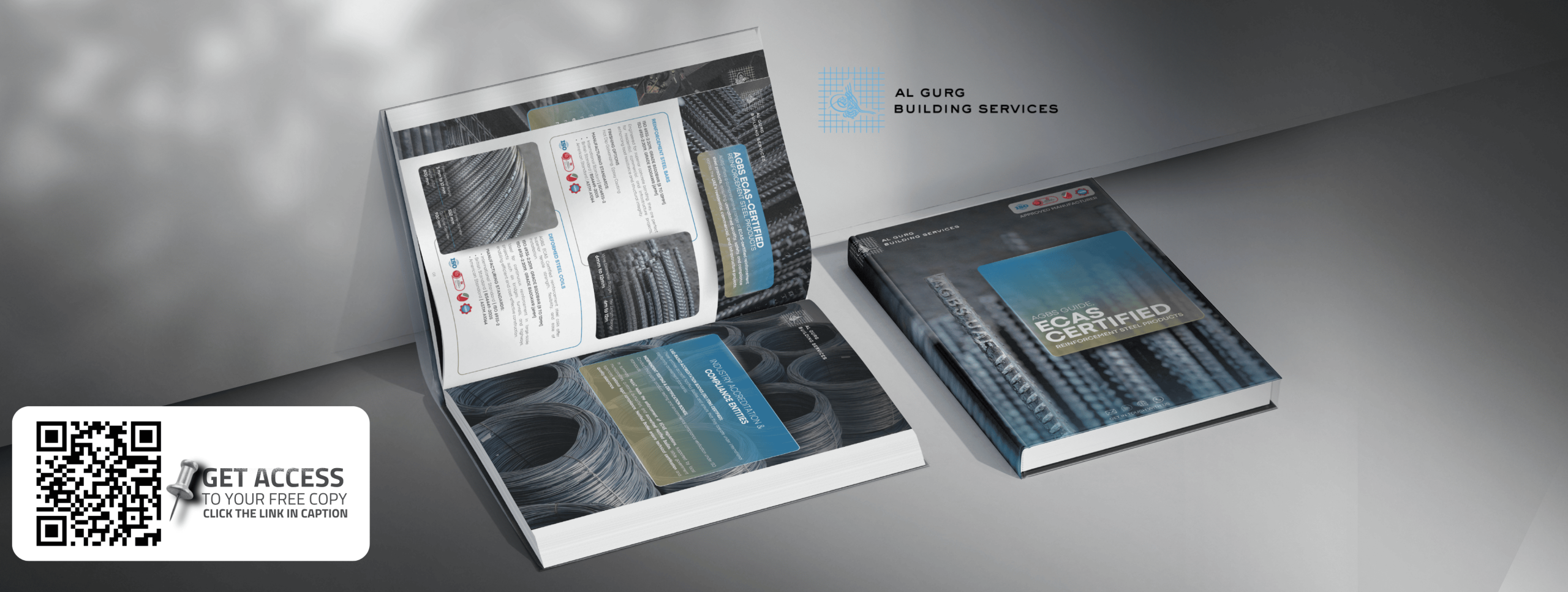
  • Want to read about ECAS Certification?, access our latest free eBook- “ECAS Guide eBook for reinforcement steel products by AGBS.”
  • Read more informative articles from AGBS Insights (Blogs) and don’t miss our next article by following us on LinkedIn  @Al Gurg Building Services.
Understanding Reinforcement Steel Grade B500B | Basics Of Reinforcement Steel

Whether it is a villa, a multi-storey building, a bridge, or an industrial foundation, the safety of the structure depends heavily on the quality of the steel inside it. Among all the reinforcement grades used in the region, B500B is one of the most common and most reliable.


What Exactly Is B500B?
B500B is a high-strength steel bar used inside concrete. The “500” refers to its 500 MPa yield strength, which simply means it can handle high load before it starts to plasticaly deform. The first “B” means that this steel is used for reinforcing concrete while the later “B” represents its ductility class, meaning it is strong but also flexible enough to handle movement, temperature differences, and stress without breaking suddenly.

Under BS 4449:2005, B500B must meet the following characteristics:
• It must reach a yield strength of 500MPa (Characteristic Value)
• It must elongate at maximum force by 5% total elongation (Agt) before necking occurs.
• Its tensile strength must always be greater than its yield strength, ensuring that- its tensile-to-yield ratio is always at least 1.08.

This combination of strength and flexibility is why the UAE industry prefers it for most structural works.


Chemistry Behind B500B
For steel to be safe, weldable, and durable, its chemical composition is controlled. B500B limits the amount of carbon, sulphur, phosphorus, and other elements to ensure the bar can be welded on-site and can resist cracking. Under BS 4449:2005 Carbon is kept low (0.22% max), Sulphur and phosphorus are controlled to prevent brittleness, the carbon equivalent (CEV)-which shows how weldable the steel is-must be maximum 0.50% or lower. B500B is designed to be strong, safe, and easy to weld-all at the same time. This matters a lot in the UAE because most projects involve prefabricated steel, and on-site welding or mechanical couplers.


Specifications of B500B
• Strong enough for high-rises: The UAE’s skyline is full of towers-these structures demand steel that can take high loads. B500B’s 500 MPa strength gives engineers the safety margin they need.
• Reliable bonding with concrete: B500B bars come with controlled rib geometry (rib height, spacing, and angle) so they grip concrete tightly.
BS 4449:2005 gives exact ranges for these rib shapes to ensure proper bonding. This bond is what prevents concrete from slipping over the steel and losing strength.
• Proven fatigue resistance: The bars must survive 5 million cycles of stress in fatigue testing. This is important in bridges, metro lines, industrial plants, and structures that experience vibration

B500B is mostly used in:
• Columns, slabs, beams, and foundations in high-rise buildings
• Roads, bridges, flyovers, and tunnels
• Airport structures
• Warehouses and industrial plants
• Precast elements such as hollow-core slabs and beams
• Water tanks and retaining walls


It is a general-purpose, all-rounder steel grade suitable for most structural concrete applications. B500B reinforcement steel is trusted across the UAE because it strikes the perfect balance between strength and flexibility. It is strong enough to carry heavy loads, flexible enough to resist cracking, and weldable enough for practical on-site work.

At Al Gurg Building Services, Our team works closely with clients to provide tailored and compliant solutions that meet their project requirements without compromising quality. We are committed in manufacturing traceble, sustainable, and compliant reinforcement steel products.
Our ECAS and DCL-certified reinforcement steel products are welded fabric (welded wire mesh), reinforcement steel bars (rebars), and reinforcement steel coils.

Check our product quality and access our catalogue: Visit here
> To inquire our reinforcement steel products, visit www.brcarabia.com/. or request a callback
> Want to learn more about ECAS Certification?, access our latest free eBook-
“ECAS Guide eBook for reinforcement steel products by AGBS.”
> Read more informative articles from AGBS Insights (Blogs) and don’t miss our next article by following us on LinkedIn @Al Gurg Building Services.
Build with quality. Build with sustainability – Build with AGBS.

Corrosion in Reinforcement Steel Products: Acceptance & Non-Acceptance in the UAE- 

In the UAE, construction sites constantly face heat, humidity, dust, and coastal salt exposure. Because of this environment, reinforcement steel (rebar) may show surface discoloration during storage, transportation, or handling. But the question is,

Which discoloration is acceptable and which is a warning sign?

Understanding this helps ensure structures remain strong and safe for decades. At AGBS, we manufactured and handled reinforcement steel in line with UAE project requirements, helping customers avoid long-term durability issues from the start.


Why does discoloration happen?
Steel naturally reacts to its surroundings:

  • Humidity and rainfall
  • Coastal air with chloride exposure
  • Dust and airborne chemicals
  • Handling, storage, and transportation conditions

Even epoxy-coated and galvanized rebars can display slight shade changes due to production and curing variations. These color differences doesn’t mean the steel is damaged.

AGBS follows controlled & super-wised supply processes to protect bars from unnecessary exposure while ensuring compliance with UAE durability specifications.


Acceptable discoloration
Some types of discoloration do not harm the steel or the bonding with concrete.

  • Uniform light rusting:
    A thin, adherent, and uniform oxide film (light rust) that forms naturally during storage or handling is acceptable. This type of oxidation often increases surface roughness, enhancing the mechanical interlock and bond strength between steel and concrete.
  • Normal color variation in coatings:
    Epoxy-coated or galvanized bars may exhibit color variations (from light green to dark green for epoxy, or dull gray to shiny silver for zinc). These variations occur due to curing temperature differences, film thickness variation, or zinc oxidation stages, and are not indicative of coating failure as long as continuity and adhesion are maintained.
  • Handling marks and stains:
    Minor surface marks, scuffs, or dirt stains that do not penetrate the coating or oxide layer are acceptable. These superficial imperfections typically result from transport, bundling, or site handling and have no structural effect.
  • Galvanized bar white deposits:
    A soft, powdery white substance known as white rust (zinc hydroxide) can form on galvanized bars exposed to moisture during storage. This is a light zinc oxidation product and does not indicate deep corrosion unless it becomes compact, crusty, or associated with dark gray corrosion spots, which would suggest underlying steel exposure.

If discoloration or deposits can be removed by light brushing or wiping, leaving a sound surface underneath, the bar remains acceptable for use without additional cleaning or coating.


Non-Acceptable Discoloration
Some discoloration is a sign of serious corrosion. These must not be used in concrete unless repaired or replaced:

  • Heavy rust or scale formation:
    Deep reddish-brown rust with loose, flaky, or scaly texture indicates ongoing corrosion. This leads to sectional loss, reduction in effective diameter, and deterioration of mechanical properties (tensile strength and ductility).
  • Pitting corrosion:
    Localized pits or cavities represent anodic attack on the steel surface, leading to concentrated material loss and potential stress risers. Such bars may fail prematurely under load and must not be used.
  • Coating discontinuity or damage:
    For epoxy-coated or galvanized reinforcement, exposed bare steel, cracks in the coating are unacceptable. These defects allow accelerated corrosion under chloride or alkaline exposure and invalidate coating protection.
  • Surface contamination:
    Presence of oil, grease, lubricants, or paint residues interferes with the chemical adhesion between steel and cement paste. Any contaminant that reduces surface energy or prevents proper wetting of the bar surface renders the reinforcement non-compliant.
  • Chalking, blistering, or peeling of coatings:
    Such defects indicate UV degradation, chemical attack, or improper curing of protective layers. Loss of coating integrity exposes steel to environmental corrosion, disqualifying the bar unless re-coated and verified.

If discoloration shows deep damage, loose metal, or visible coating breaks, it is not acceptable. AGBS provides consistent quality assured reinforcement steel that comply with ECAS and DCL for international standards such as ISO and BS.


Why Is This So Important in the UAE?

Reinforcement steel is the main strength and support system inside every concrete element. It carries loads, absorbs stress, and keeps buildings safe for decades. When the steel surface is damaged (especially before concrete is poured) the issues may stay hidden at first, but they will eventually appear inside the structure, where maintenance becomes difficult and extremely costly.

In the UAE, structures are constantly exposed to harsh environmental conditions such as high humidity, marine salts, and aggressive chloride exposure-especially in coastal developments. Even small surface defects on reinforcement steel can rapidly turn into major durability problems once the building is in use.


If discoloration or corrosion is ignored at the start, it can lead to:

  • Weak bonding between concrete and reinforcement steel
  • Accelerated internal corrosion continuing after construction
  • Cracks, water leakage, and concrete spalling
  • Shorter service life and costly maintenance
  • Potential safety concerns over time

That’s why proper inspection and acceptance decisions at the construction stage are critical to ensuring the durability and safety of the UAE’s advanced infrastructure.


How you can evaluate discoloration?
On-site checks typically confirm:

  • Steel surface remains smooth
  • No deep rust or loose scale
  • Coating remains continuous with no exposed steel
  • Rust can be brushed off easily
  • Ribs/deformations remain clear and undamaged

Request supplier for compliance certificates such as ECAS / DCL product approvals in-order to evaluate the quality. As the first cold drawn steel producer to achieve ECAS and DCL certification in the UAE, we can proudly assist all our clients with the required documents which fasten their project approval proccess.

Not all discoloration is harmful-Choose the right steel to ensure long-term durability.


References

  • ASTM A615 / A615M – Standard Specification for Deformed and Plain Carbon-Steel Bars for Concrete Reinforcement, clause 12 Finish, sub clause 12.2
  • ASTM A767 / A767M – Standard Specification for Zinc-Coated (Galvanized) Steel Bars for Concrete Reinforcement, clause 6 Finish and Adherence of Coating
  • ASTM A775/A775M- Standard Specification for Epoxy-Coated Steel Reinforcing Bars, clause 8 Requirements for Coated Steel Reinforcing Bars

Build with quality. Build with sustainability – Build with AGBS.

Why is reinforcement steel essential for long-lasting concrete structures?

Concrete is one of the most widely used construction materials in the UAE. It gives Strength & Structure to our Constructions. Concrete has one limitation — it is strong under compression but weak when pulled or bent. That’s where reinforcement steel, commonly called rebar, coils, or welded wire mesh becomes essential. It is the source that gives concrete its full strength and long-term durability.
In this blog we explained how reinforcement steel works, why it’s crucial in UAE construction, what makes certified reinforcement steel products, is important for structural performance and why reinforcement steel is important .


Why concrete needs reinforcement?

Concrete alone can handle compression, like the weight of a column. But when forces cause bending or stretching as happens in slabs, beams, or bridges concrete starts to crack. These cracks are natural, but if left unchecked, they can lead to major structural problems over time. Reinforcement steel takes on those tensile (pulling) forces. It bridges cracks before they widen, carries loads that concrete cannot, and ensures that the structure remains safe and secure.
Steel and concrete work so well together because they expand and contract at nearly the same rate when exposed to heat or cold. This compatibility is especially valuable in the UAE, where daily temperatures can change dramatically. The steel moves with the concrete, not against it, keeping the bond stable even under thermal stress.


How reinforcement steel strengthens concrete

  • Carries the loads concrete can’t: In every beam, slab, or column, there’s a zone that wants to stretch and crack.
    Reinforcement steel carries that tension, allowing the structure to stay intact and flexible instead of snapping. This property, called ductility-gives concrete its toughness.
  • Distributes Stress Evenly: When loads shift from heavy winds, vehicles, or earthquakes the steel helps spread the pressure through the structure. Redistributing forces and preventing weak areas from taking all the stress.
  • Control Cracks: Cracks in concrete are normal. but the key concern is how wide those cracks become. Reinforcement steel plays a vital role in limiting crack width, keeping them prevent the intrusion of water, salt, or chemicals. This is especially critical in coastal areas of the UAE

How reinforcement steel improves durability

  • Protecting Against Corrosion: In harsh environments like marine areas in Dubai or industrial zones in Abu Dhabi moisture and chloride ions can reach the steel through micro-cracks. When that happens, steel starts to rust, and corrosion expands its volume several times, cracking the concrete from the inside.
  • Using Protective Coatings: For extra protection, reinforcement bars can be coated with galvanized or epoxy.These coatings act like protection layer, slowing down corrosion and extending life, especially in foundations, coastal projects, or desalination plants.

AGBS Provide Epoxy and galvanized reinforcement steel bar tailored to your project needs, Contact us to know more


Reinforcement steel standards in the uae

In the UAE, reinforcement steel must meet stringent standards such as BS 4449 to ensure strength, ductility, and weldability. At AGBS, we are committed to delivering top-tier reinforcement steel products that meet these standards. As a trusted name in the industry, AGBS proudly supplies ECAS and DCL-certified reinforcement steel across the region. Our product range includes:
• Reinforcement steel bars – Engineered for superior bonding strength in concrete.
• Steel coils – Ideal for flexible and tailored reinforcement layouts.
• Welded Fabric (Welded wire mesh) – Designed for fast, accurate slab reinforcement.
Each product is rigorously tested and tailored for the UAE’s demanding environmental conditions—high salinity, humidity, and extreme temperatures. Every batch is certified for chemical composition, tensile strength, and bendability, ensuring consistent performance and long-term durability.


Concrete gives shape. Steel gives life.

Together, they becomes the backbone of modern UAE construction. Reinforcement steel doesn’t just make concrete stronger – it makes it reliable, safe, and capable of withstanding the test of time and climate. In every project, choosing certified, high-quality reinforcement isn’t an extra – it’s a responsibility. And when that reinforcement steel products comes from a trusted UAE manufacturer like Al Gurg Building Services, you know your Project is built not just for today, but for decades to come.

At AGBS we focus on consistent quality, certified production, and provide tailored solutions that helps contractors, engineers, and consultants to deliver cost-efficent use of the reinforcement steel products that meet UAE’s demanding safety and durability standards.
Whether it’s rebar for high-rise towers, welded mesh for slabs, or coils-AGBS manufactures reinforcement steel products tailored to your project needs with compliance, safety, sustainability, and traceability.

– Check out our reinforcement steel products quality by visiting our ‘Quality‘ section
– Follow us on linkedin-let’s stay connected: @Al Gurg Building Services

What Happens If You Use Non-Certified Reinforcement Steel In the UAE?

In the UAE, using certified reinforcement steel is a must, not an option. If you choose non-certified steel, you’d be exposing your business to one or more safety, legal financial and loss of credibility risks. In This blog we will explain what can go wrong and how UAE laws and standards apply.


UAE Regulation For Reinforcement Steel In The Construction Industry

  • Cabinet Resolution No. (121) of 2023 Concerning the UAE Scheme for Steel Bars for Concrete Reinforcement: All carbon steel products for concrete reinforcement and billets, whether imported, locally manufactured, or produced in free zones, must comply with the UAE ECAS Scheme, as per Cabinet Resolution No. (121) of 2023. These products are required to have the ECAS mark, be fully traceable, and include a Digital Product Passport (DPP) containing batch-specific data accessible via a dynamic QR code.
  • DCL Certificate: Dubai Central Laboratory Certification for reinforcement steel is an official Certificate of Product Conformity issued by the Dubai Central Laboratory Department (DCLD), by Dubai Municipality. It certifies that the steel complies with relevant local and international standards. This certification confirms that the product has been evaluated, meets all required criteria, and is authorized to stamp the DCL Conformity Mark.
  • Abu Dhabi & QCC Certification Schemes: In Abu Dhabi, the Quality and Conformity Council (QCC) has its own certification schemes and Trustmark for construction steel. Steel used needs to meet these performance and environmental requirements.

○ Risks & Penalties

  • Penalties & Fines: If you don’t follow the regulations (like using non-ECAS or non-DCL steel), you could end up paying huge penalties and future restrictions.
  • Project Approval Delays or Rejection: Project Plans using non-certified reinforcement steel products may not receive approval from relevant authorities. This can lead to delays or rejection of permits.
  • Contractual Breach & Liability: Using non-certified reinforcement steel may constitute a breach of contract, as most construction agreements mandate compliance with applicable laws and standards. This can result in legal claims, financial liabilities, or termination of the contract
  • Safety Risks:Non-certified reinforcement steel poses serious safety risks due to its uncertain mechanical and chemical properties. It may lead to structural weaknesses, such as cracking, premature deterioration, or collapse under stress. In critical structures, this increases the danger to occupants and workers, especially during extreme loads, environmental exposure, or seismic events.

○ Financial & Credibility Loss

  • Repair and Rework Costs: If non-certified steel fails inspections or is found to be non-compliant during construction, it may need removal and replacement. This costs time and money, often much more than using certified steel from the start.
  • Loss of Reputation & Credibility: Contractors, suppliers or project owners associated with non-compliant steel may lose credibility and trust with clients, regulators, and the market.

○ Sustainability Impacts

  • Lack of Traceability: Non-certified steel typically lacks Digital Product Passports, making it difficult to ensure traceability, verify environmental performance, or comply with UAE sustainability frameworks such as ESTIDAMA, SAAFAT, and LEED. This undermines efforts to meet green building targets and can lead to non-compliance with government-mandated sustainability requirements.

Using non-certified reinforcement steel may seem cost effective upfront, but it carries significant risks, including project delays, safety issues, financial penalties, and reputational damage.


In the UAE, schemes like ECAS and Dubai Central Laboratory (DCL) certifications are mandatory for reinforcement steel. Choosing certified steel is not just about legal compliance—it’s essential for delivering safe, sustainable, and regulation-aligned construction projects.

Build with Quality. Build with Compliance.
Partnering with trusted reinforcement steel manufacturers certified under ECAS and DCL ensures your projects meet the highest standards of safety, quality, and regulatory compliance from day one.

Whether you need welded wire mesh/welded fabric, reinforcement bars, or coils, AGBS delivers ECAS & DCL certified, high-quality-sustainable reinforcement steel products backed by credibility and experience.
Quality First – Al Gurg Building Services,


📲 Talk to Our Experts: Request a Callback
📈 Check out AGBS Insights for more resources
📥 Access your free copy of “ECAS Guide eBook for Reinforcement Steel Products” by AGBS

How UAE Contractors Can Optimise Steel Usage Without Compromising Quality?

In today’s competitive construction market, efficient reinforcement steel management isn’t just good practice—it’s essential. Here’s how contractors in the UAE can optimise steel usage while upholding steel quality, compliance, and project safety.


1. Optimise Rebar Design & Detailing
• Effective steel optimisation begins during the design phase:
Utilise precise structural detailing and bar bending schedules (BBS) to minimise waste and over-ordering. Clear drawings reduce on-site confusion and over-cutting.
• Leverage software or parametric optimisation tools, such as equilibrium-based optimisation, to distribute reinforcement more efficiently and reduce material usage whilst ensuring structural resilience.

2. Minimise Cutting Waste with Smart Planning
Traditional rebar lengths and poor cutting lead to waste of up to 5% or more:
• Adopt special-length ordering and lap splice optimisation, or use mechanical couplers to greatly reduce cutting and scrap.
• Prior planning ensures minimal wastage and aligns with UAE’s sustainability goals.

3. Invest in Proper Storage & Handling
Protecting steel before installation is just as important:
• Store steel at least 150 mm above ground, ideally on racks, and shield against moisture, direct sun, and contamination.
• Ensure controlled environmental conditions in the yard and during transport to maintain steel integrity.

5. Embrace Sustainable and Circular Practices
Optimisation benefits both construction and environment:
• Reuse off cuts or damaged reinforcement steel as secondary products (e.g. nails), or return to recycling streams.
• Contractors can support UAE’s sustainability initiatives by reducing carbon footprint through reduced steel usage.
Frontiers

6. Prioritise Standard Compliance & Quality
Efficiency must never compromise safety:
• Use only certified reinforcement steel that meets standards like BS 4449:2005 + A3:2016 and is traceable via batch tracking. This preserves confidence and structural integrity.
• Accurate fabrication, bending, and cutting—following procedures and pre-heating where required—prevents material damage.


Putting It All Together: A Contractor’s Checklist:
▪︎ Detailed design & optimisation: Reduces over-ordering and material waste
▪︎ Planned cutting & couplers: Minimises scrap and shortens schedules
▪︎ Controlled storage: Prevents corrosion and preserves material quality
▪︎ Precise placement & tying: Avoids rework and ensures correct load bearing
▪︎ Sustainable recycling strategies: Cuts costs and lowers environmental footprint
▪︎ Certified quality & fabrication: Maintains structural performance and compliance


Why Steel Optimisation Matters in the UAE
▪︎ Cost Savings: Small reductions in steel waste translate into significant project savings.
▪︎ Faster Timelines: Efficient reuse and planning reduce downtime and delays.
▪︎ Regulatory Confidence: Following best practices supports inspection approvals by UAE authorities.
▪︎ Enhanced Reputation: Delivering structurally sound, compliant projects strengthens client trust.


Optimising steel usage isn’t just about trimming budgets—it’s a strategic discipline. By focusing on efficient detailing, smart cutting, proper storage, and stringent quality controls, UAE building contractors can deliver lean, safe, and environmentally responsible construction.

Need help with optimising reinforcement steel usage or sourcing certified reinforcement steel products?
Reach out to our AGBS team for expert support: Contact Us Now

Is ECAS Certification Only About Safety? Here’s What You Might Be Missing

In the UAE’s fast-paced construction sector, quality and safety are often the headline priorities. But when it comes to ECAS Certification for reinforcement steel products, most professionals stop at “safety” and move on. That’s a missed opportunity. ECAS is far more than just a safety label. It represents a full-spectrum commitment to quality, compliance, traceability, sustainability, and innovation in the construction value chain.
In this blog, we bust the myth that ECAS certification is only about safety. We explore its broader benefits and why forward-thinking engineers, contractors, and project managers should see it as a strategic tool, not just a regulatory requirement.


ECAS Is Not Just About Safety – It’s About Compliance With UAE Laws

ECAS is regulated by the Ministry of Industry and Advanced Technology (MoIAT) and is legally required for reinforcement steel to be sold or used in UAE  construction projects. Without it, even the safest-looking reinforcement steel could be considered non-compliant. ECAS ensures that:

  • The reinforcement steel conforms to national and international standards such as BS 4449:2005 + A3:2016
  • The supply chain is monitored and documented
  • Products meet mechanical and chemical benchmarks for performance

It Guarantees Full Product Traceability Through QR-Coded Verification. Every ECAS-certified reinforcement steel product must come with a Digital Product Passport (DPP). This includes:

  • Batch numbers
  • Test results
  • Manufacturer details
  • Chemical composition

This helps eliminate low-quality or counterfeit steel, which can seriously affect concrete bonding and structural life. The traceability enhances accountability across suppliers and contractors.


ECAS Certification Encourages Sustainable Construction

Modern construction demands sustainable building materials. ECAS aligns with UAE’s national agenda for sustainability by enforcing:

  • Environmental compliance during reinforcement steel production
  • Documentation of energy use and carbon footprint
  • Promotion of Environment Product Declarations (EPDs)

So, certified reinforcement steel doesn’t just hold up your building—it helps future-proof your projects.


ECAS-Certified Reinforcement Steel Helps Project Approvals Move Faster

Municipalities and regulatory bodies in the UAE often prioritise or require ECAS certification during approval stages. Using certified reinforcement steel simplifies:

  • Tender evaluations
  • Design approvals
  • Site inspections and audits

With ECAS-certified reinforcement steel, you’re project-ready with fewer hurdles.


Positions You as a Quality-Focused Brand or Contractor. When your building materials meet ECAS standards, your business reputation is elevated. You are seen as:

  • A trusted supplier or contractor
  • Someone who complies with best practices
  • A player aligned with government quality agendas

In a competitive industry, this can make a difference when bidding for high-value contracts.


ECAS Is a Strategic Investment, Not a Tick-Box Exercise

If you’re viewing ECAS as just a safety formality, you’re not seeing the full picture. From legal compliance and sustainability to improved traceability and faster approvals, ECAS-certified reinforcement steel offers wide-reaching benefits. Al Gurg Building Services is proud to be the first cold drawn reinforcement steel manufacturer in the UAE to achieve ECAS certification. We’ve created a free eBook to help you understand ECAS from every angle.

  • Download the ECAS eBook: Now Gain full clarity on what ECAS certification in reinforcement steel means, why it matters, and how you can benefit from using ECAS-approved reinforcement steel.
    🔗 Access the Free ECAS Guide eBook
  •  Follow AGBS on LinkedIn: Stay up to date with the latest trends, certifications, and product innovations in UAE’s steel industry
    🔗 Follow Us on LinkedIn

AGBS Launched ECAS Guide e-Book

We’re proud to announce the release of our official ECAS Guide eBook for Reinforcement Steel Products by AGBS – a comprehensive, industry-focused resource designed to help professionals across the UAE understand and confidently navigate the Emirates Conformity Assessment Scheme (ECAS) for reinforcement steel products in the construction sector.

This guide reflects AGBS’s ongoing commitment to quality, compliance, traceability, and sustainability for everyone working with reinforcement steel under evolving UAE regulations.


What’s Inside the ECAS Guide eBook?

Our ECAS Guide eBook is a clear, practical reference tailored for manufacturers, engineers, contractors, procurement teams, and all stakeholders in the reinforcement steel supply chain. It provides end-to-end clarity on the ECAS framework and how it applies to regulated reinforcement steel products. Here’s what you’ll find inside:

Fundamentals Of ECAS Certification

Benefits Of ECAS Certification For Manufacturers & End-User

  • Benefits For Manufacturers
  • Benefits For End-Users
  • AGBS’s Role In Ensuring Quality & Certification
  • Our ECAS-Certified Reinforcement Steel Products

Legal & Financial Consequences Of Non-Compliance

  • Penalties For Non-Compliance
  • Authorities Responsible For Enforcing Ecas Regulations
  • Government Authorities Responsible For Regulatory Enforcement

Regulatory Resources

  • Regulatory Resources & References

All content is built around Cabinet Resolution No. (121) of 2023, detailing the UAE Scheme for Steel Bars for Concrete Reinforcement, issued by the Ministry of Industry and Advanced Technology (MoIAT). This isn’t just a compliance tool—it’s a strategic resource that supports your role in building trust, ensuring safety, and maintaining a competitive edge in the UAE’s construction ecosystem.


Who This Guide Is For

  • Engineers, contractors, and construction professionals seeking ECAS clarity
  • Manufacturers of reinforcement steel bars needing regulatory guidance
  • Procurement teams sourcing ECAS-certified reinforcement steel
  • Compliance officers and quality managers ensuring due diligence

Why We Created This Guide

ECAS regulations are undergoing evolution, and we understand the complexity of compliance-which is why we have developed this eBook to raise awareness among contractors, developers, engineers, and other industry professionals.  Our objective is to clarify the ambiguity surrounding ECAS certification. We are committed to the reinforcement of quality reinforcement steel products through  traceability and sustainability.

If you are a reinforcement steel industry professional in the UAE, this guide is made for you.


Access the Guide

  • Access the ECAS Guide eBook forReinforcement Steel Products by AGBS: Click here

We’re excited to share some more valuable resources coming soon, especially tailored for industry professionals. To make sure you don’t miss a thing, follow us on LinkedIn!


About AGBS

At AGBS, we’re proud to be the first cold drawn steel producer in the UAE to achieve both ECAS and DCL certifications. We continue to lead in reinforcement steel manufacturing, product compliance, and supplying certified solutions that support UAE’s construction excellence.

For more insights, visit our AGBS Blog or contact us for ECAS-certified reinforcement steel products tailored to your project needs.

5 Reasons Developers Are Shifting to ECAS-Certified Rebar in the UAE

Across the UAE’s building construction sector, developers are making more deliberate choices about the building materials they use—especially when it comes to reinforcement steel. With stricter regulations and higher performance expectations, many are moving towards ECAS-certified rebar as a standard requirement.

So, what’s driving this shift? Here are five key reasons why ECAS-certified reinforcement steel has become the smarter choice for developers across the UAE:

  1. Trusted by UAE Authorities

The ECAS mark, issued by the Ministry of Industry and Advanced Technology (MoIAT), confirms a product’s compliance with UAE-approved standards for mechanical strength, chemical composition, and durability. For developers, this is more than just a label—it’s an assurance that their projects meet national safety and performance criteria.

In fact, certain leading UAE-based reinforcement steel providers have been recognized for meeting ECAS requirements. Learn more here.

  1. Essential for Regulatory Approvals

As per Cabinet Resolution No. 121 of 2023, ECAS certification is now a mandatory requirement for reinforcement steel products placed in the UAE market. Projects that source ECAS certified rebar avoid costly disruptions, delays in municipal approvals, or the risk of using non-compliant building materials.

  1. Transparent, Traceable Product Data

One of the standout features of ECAS-certified rebar is the Digital Product Passport—accessible via a QR code. It includes all relevant product details such as batch number, chemical and mechanical test results, and standard compliance.

This transparency is especially valuable for project consultants and engineers managing multiple stakeholders and milestones.

  1. Sustainable Building Materials

Beyond compliance, ECAS-certified reinforcement steel also supports sustainable construction. The required Environmental Product Declarations (EPDs), aligned with EN 15804, give developers confidence that the steel they’re using supports UAE’s green building initiatives.

  1. Long-Term Confidence and Quality

Manufacturers of ECAS-certified rebar undergo regular audits and performance evaluations to maintain certification. This commitment to quality management and operational control ensures product consistency batch after batch.

Some UAE Steel Manufactures not only meet these requirements but have also integrated ECAS standards into their long-term quality frameworks. One such example is highlighted on AGBS’s official news portal.

For developers, the move towards ECAS-certified reinforcement steel is not just about meeting a legal requirement—it’s about ensuring safety, sustainability, and smooth project execution. Partnering with suppliers who have already met ECAS standards can make that path clearer, simpler, and fully compliant.

If you’re exploring trusted suppliers for ECAS-certified reinforcement steel, it may be worth discovering more at www.brcarabia.com/