Surface Rust (Corrosion) and Structural Implications of Reinforcement Steel

Reinforcement steel plays a critical role in reinforced concrete structures, directly influencing strength, load transfer, crack control, bond performance, and long-term durability. One commonly encountered condition during storage, handling, or prior to placement is surface rust on reinforcement steel. While often viewed as a defect, surface rust must be evaluated based on its structural relevance, rather than appearance alone.

Understanding the mechanism of corrosion, its effect on mechanical properties, and its impact on bond and durability is essential for making technically sound decisions on reinforcement usability-particularly in demanding construction environments.


Formation of Surface Rust on Reinforcing Steel

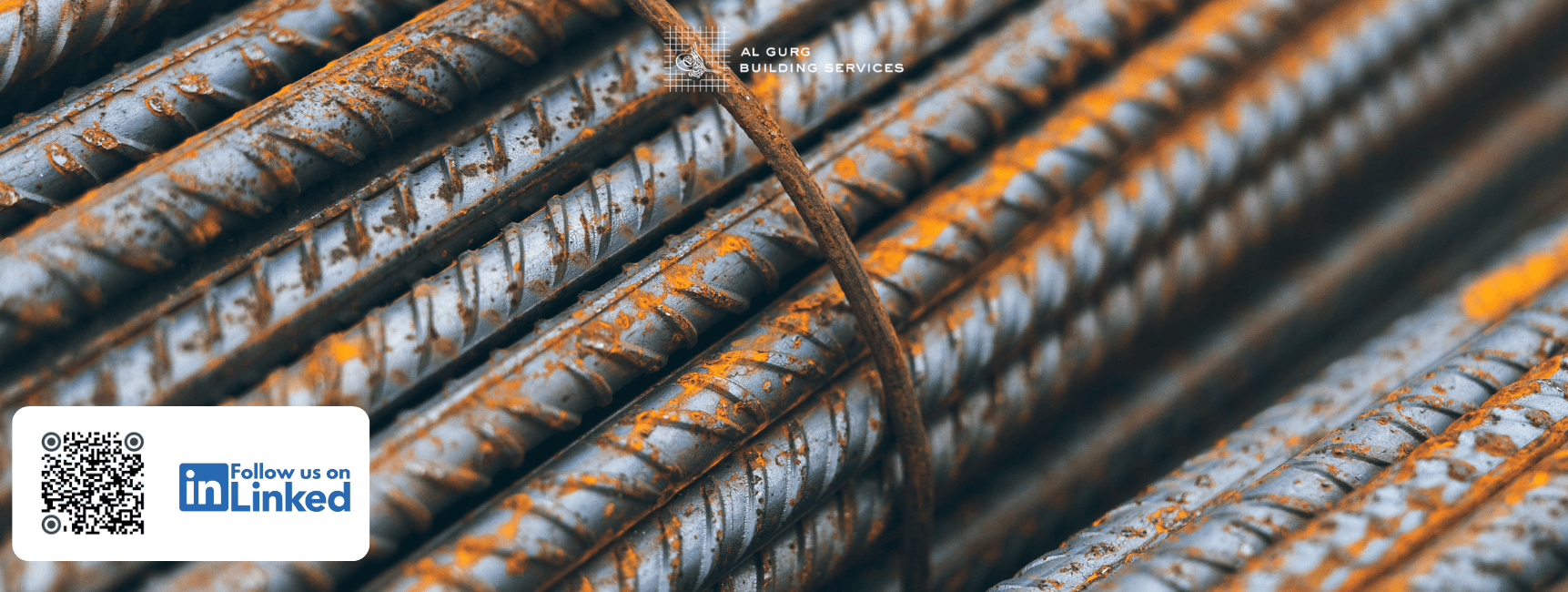
Surface rust forms when iron undergoes atmospheric corrosion in the presence of moisture. The rate and nature of this process are strongly influenced by environmental factors such as humidity, temperature, and pollution levels.

In oxygen-rich environments, corrosion typically produces red rust, which is the most commonly observed form on exposed reinforcement. In contrast, oxygen-poor conditions result in the formation of black rust. When chlorides are present, corrosion behaviour changes significantly. Rather than spreading uniformly, corrosion becomes localized, leading to pitting corrosion, which penetrates deeper into the steel and poses a higher structural risk.Shape


Effect of Corrosion on Mechanical Properties

The mechanical performance of reinforcing steel is closely tied to its cross-sectional area. When corrosion is light and uniformly distributed, its impact on mechanical properties is minimal. In such cases, the underlying steel retains its original strength, ductility, and toughness, provided there is no measurable reduction in bar diameter.

As corrosion progresses to a significant or advanced level, its effects become structurally relevant. Loss of cross-sectional area directly reduces the steel’s tensile strength and load-carrying capacity.

Corrosion also leads to reduced ductility, making the steel more brittle and less capable of undergoing deformation before failure. In chloride-rich environments, pitting corrosion further accelerates crack initiation and significantly reduces the life of reinforcement steel.


Effect of Rust on Bond Strength

Bond strength between concrete and reinforcement steel is fundamental to the performance of reinforced concrete structures. Light, uniform surface rust generally has little negative effect on bond strength and may even enhance bonding by increasing surface roughness and improving mechanical interlock.

As corrosion advances to a moderate level, the expanding rust layer generates internal pressure at the steel–concrete interface. This can lead to microcracking in the surrounding concrete and gradually weakening the bond.

In advanced corrosion stages, particularly where localized pitting occurs, bond performance deteriorates rapidly. Pitting reduces the effective bar diameter and weakens both the steel and its bond area. Once concrete cover cracking occurs or when corrosion products become flaky and non-adherent, bond strength drops sharply.


Effect of Rust on Durability

Reinforcement steel produced in good-quality, alkaline concrete (pH around 12) remains passive and corrodes very slowly, typically around 0.1 micrometers per year. This passive condition is maintained by the alkaline environment provided by the concrete.

Passivity can be disrupted when chlorides penetrate the concrete or when carbonation lowers the pH at the steel surface. However, in good-quality concrete where passive conditions are preserved, the presence of light surface rust on reinforcement does not increase corrosion rates and does not compromise long-term durability.


Acceptable Rust on Reinforcement

Most international standards do not define a strict quantitative limit for acceptable rust on reinforcement, as corrosion appearance alone does not reliably indicate structural performance. Instead, assessment is based on the principle of fitness for purpose.

According to CIRIA Report 147, acceptability of rust on reinforcement should be evaluated using five key criteria:

  • Bond strength with concrete
  • Remaining cross-sectional area of the bar
  • Impact on long-term durability
  • Mechanical acceptability of corrosion-related damage
  • Effect on appearance of exposed concrete surfaces

CIRIA Assessment Guidance
CIRIA recommends a structured evaluation approach to assess these criteria.

  • Reinforcement should be inspected for loose rust by rubbing the surface with a gloved hand. The presence of pitting should be carefully examined, as it indicates localized corrosion.
  • Loss of cross-section can be assessed by measuring weight reduction per unit length, while chemical contamination should be identified through laboratory analysis when required.
  • A final visual inspection confirms whether corrosion has resulted in mechanical damage affecting the reinforcement’s structural performance.

Remedial Treatment-CIRIA Recommendations
Where rust or scale is clean and adherent, no remedial treatment is required

  • If rust or scale is clean but loose, mechanical treatment or wet abrasive cleaning may be applied, followed by water-jet washing. In cases where rust or scale is contaminated, mechanical treatment is not recommended. Wet abrasive cleaning may be used, but washing should not be carried out.

At Al Gurg Building Services (AGBS), we specialized in manufacturing and supplying quality and compliant reinforcement steel products. Our products are produced strictly following stringent mechanical, dimensional, and performance specifications outlined in the standard.

Our reinforcement steel products such as welded fabric (welded wire mesh), reinforcement steel bar (rebar), and coils are delivered with uncompromised quality, compliance, and sustainability. We offer customized services and on-time delivery to ensure the reliability of our clients is kept well. Check our reinforcement steel products quality and access our catalogue:  Visit here

Why is reinforcement steel essential for long-lasting concrete structures?

Concrete is one of the most widely used construction materials in the UAE. It gives Strength & Structure to our Constructions. Concrete has one limitation — it is strong under compression but weak when pulled or bent. That’s where reinforcement steel, commonly called rebar, coils, or welded wire mesh becomes essential. It is the source that gives concrete its full strength and long-term durability.
In this blog we explained how reinforcement steel works, why it’s crucial in UAE construction, what makes certified reinforcement steel products, is important for structural performance and why reinforcement steel is important .


Why concrete needs reinforcement?

Concrete alone can handle compression, like the weight of a column. But when forces cause bending or stretching as happens in slabs, beams, or bridges concrete starts to crack. These cracks are natural, but if left unchecked, they can lead to major structural problems over time. Reinforcement steel takes on those tensile (pulling) forces. It bridges cracks before they widen, carries loads that concrete cannot, and ensures that the structure remains safe and secure.
Steel and concrete work so well together because they expand and contract at nearly the same rate when exposed to heat or cold. This compatibility is especially valuable in the UAE, where daily temperatures can change dramatically. The steel moves with the concrete, not against it, keeping the bond stable even under thermal stress.


How reinforcement steel strengthens concrete

  • Carries the loads concrete can’t: In every beam, slab, or column, there’s a zone that wants to stretch and crack.
    Reinforcement steel carries that tension, allowing the structure to stay intact and flexible instead of snapping. This property, called ductility-gives concrete its toughness.
  • Distributes Stress Evenly: When loads shift from heavy winds, vehicles, or earthquakes the steel helps spread the pressure through the structure. Redistributing forces and preventing weak areas from taking all the stress.
  • Control Cracks: Cracks in concrete are normal. but the key concern is how wide those cracks become. Reinforcement steel plays a vital role in limiting crack width, keeping them prevent the intrusion of water, salt, or chemicals. This is especially critical in coastal areas of the UAE

How reinforcement steel improves durability

  • Protecting Against Corrosion: In harsh environments like marine areas in Dubai or industrial zones in Abu Dhabi moisture and chloride ions can reach the steel through micro-cracks. When that happens, steel starts to rust, and corrosion expands its volume several times, cracking the concrete from the inside.
  • Using Protective Coatings: For extra protection, reinforcement bars can be coated with galvanized or epoxy.These coatings act like protection layer, slowing down corrosion and extending life, especially in foundations, coastal projects, or desalination plants.

AGBS Provide Epoxy and galvanized reinforcement steel bar tailored to your project needs, Contact us to know more


Reinforcement steel standards in the uae

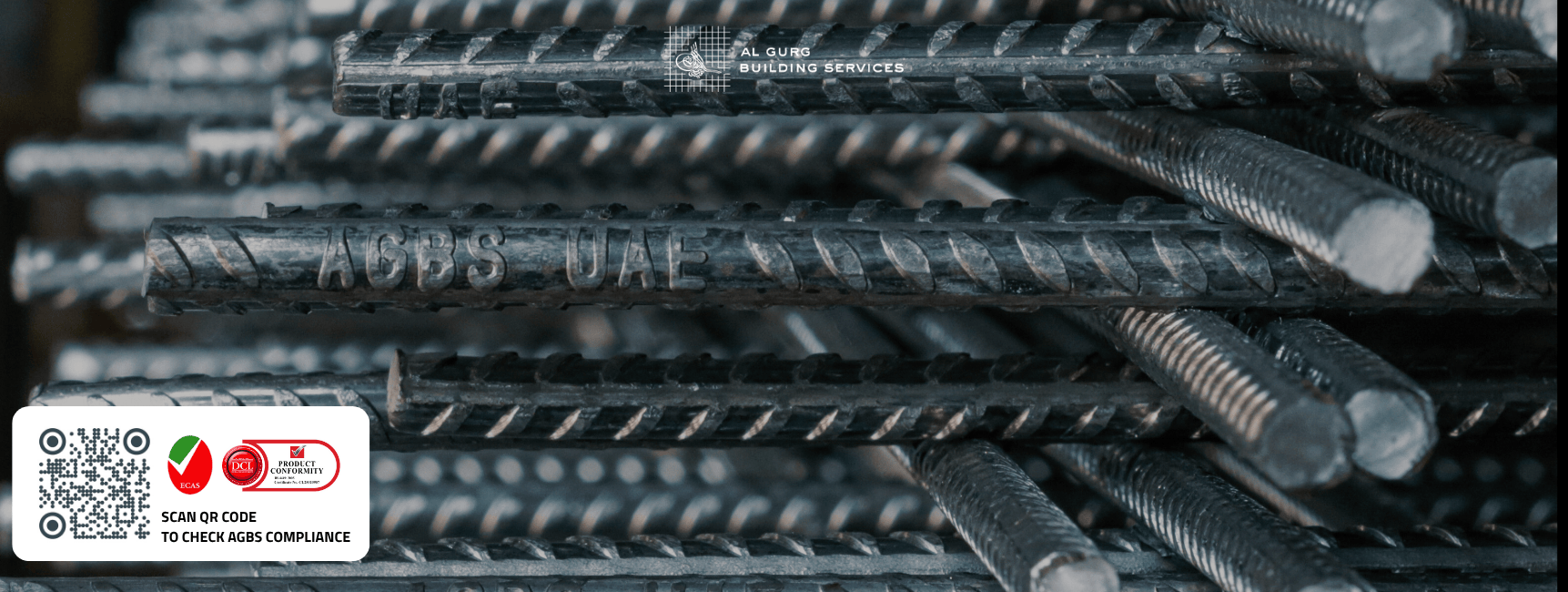
In the UAE, reinforcement steel must meet stringent standards such as BS 4449 to ensure strength, ductility, and weldability. At AGBS, we are committed to delivering top-tier reinforcement steel products that meet these standards. As a trusted name in the industry, AGBS proudly supplies ECAS and DCL-certified reinforcement steel across the region. Our product range includes:
• Reinforcement steel bars – Engineered for superior bonding strength in concrete.
• Steel coils – Ideal for flexible and tailored reinforcement layouts.
• Welded Fabric (Welded wire mesh) – Designed for fast, accurate slab reinforcement.
Each product is rigorously tested and tailored for the UAE’s demanding environmental conditions—high salinity, humidity, and extreme temperatures. Every batch is certified for chemical composition, tensile strength, and bendability, ensuring consistent performance and long-term durability.


Concrete gives shape. Steel gives life.

Together, they becomes the backbone of modern UAE construction. Reinforcement steel doesn’t just make concrete stronger – it makes it reliable, safe, and capable of withstanding the test of time and climate. In every project, choosing certified, high-quality reinforcement isn’t an extra – it’s a responsibility. And when that reinforcement steel products comes from a trusted UAE manufacturer like Al Gurg Building Services, you know your Project is built not just for today, but for decades to come.

At AGBS we focus on consistent quality, certified production, and provide tailored solutions that helps contractors, engineers, and consultants to deliver cost-efficent use of the reinforcement steel products that meet UAE’s demanding safety and durability standards.
Whether it’s rebar for high-rise towers, welded mesh for slabs, or coils-AGBS manufactures reinforcement steel products tailored to your project needs with compliance, safety, sustainability, and traceability.

– Check out our reinforcement steel products quality by visiting our ‘Quality‘ section
– Follow us on linkedin-let’s stay connected: @Al Gurg Building Services

What Happens If You Use Non-Certified Reinforcement Steel In the UAE?

In the UAE, using certified reinforcement steel is a must, not an option. If you choose non-certified steel, you’d be exposing your business to one or more safety, legal financial and loss of credibility risks. In This blog we will explain what can go wrong and how UAE laws and standards apply.


UAE Regulation For Reinforcement Steel In The Construction Industry

  • Cabinet Resolution No. (121) of 2023 Concerning the UAE Scheme for Steel Bars for Concrete Reinforcement: All carbon steel products for concrete reinforcement and billets, whether imported, locally manufactured, or produced in free zones, must comply with the UAE ECAS Scheme, as per Cabinet Resolution No. (121) of 2023. These products are required to have the ECAS mark, be fully traceable, and include a Digital Product Passport (DPP) containing batch-specific data accessible via a dynamic QR code.
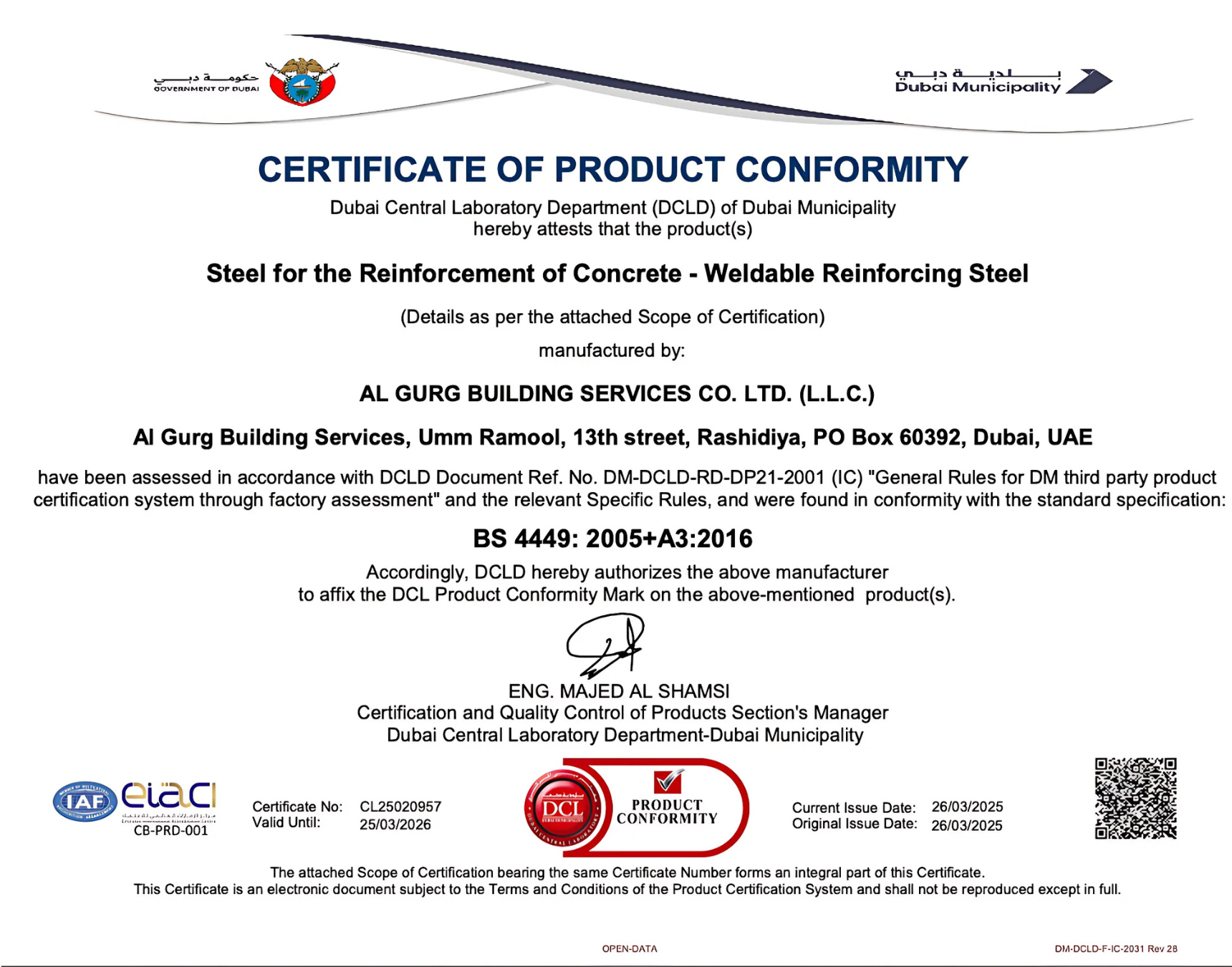
  • DCL Certificate: Dubai Central Laboratory Certification for reinforcement steel is an official Certificate of Product Conformity issued by the Dubai Central Laboratory Department (DCLD), by Dubai Municipality. It certifies that the steel complies with relevant local and international standards. This certification confirms that the product has been evaluated, meets all required criteria, and is authorized to stamp the DCL Conformity Mark.
  • Abu Dhabi & QCC Certification Schemes: In Abu Dhabi, the Quality and Conformity Council (QCC) has its own certification schemes and Trustmark for construction steel. Steel used needs to meet these performance and environmental requirements.

○ Risks & Penalties

  • Penalties & Fines: If you don’t follow the regulations (like using non-ECAS or non-DCL steel), you could end up paying huge penalties and future restrictions.
  • Project Approval Delays or Rejection: Project Plans using non-certified reinforcement steel products may not receive approval from relevant authorities. This can lead to delays or rejection of permits.
  • Contractual Breach & Liability: Using non-certified reinforcement steel may constitute a breach of contract, as most construction agreements mandate compliance with applicable laws and standards. This can result in legal claims, financial liabilities, or termination of the contract
  • Safety Risks:Non-certified reinforcement steel poses serious safety risks due to its uncertain mechanical and chemical properties. It may lead to structural weaknesses, such as cracking, premature deterioration, or collapse under stress. In critical structures, this increases the danger to occupants and workers, especially during extreme loads, environmental exposure, or seismic events.

○ Financial & Credibility Loss

  • Repair and Rework Costs: If non-certified steel fails inspections or is found to be non-compliant during construction, it may need removal and replacement. This costs time and money, often much more than using certified steel from the start.
  • Loss of Reputation & Credibility: Contractors, suppliers or project owners associated with non-compliant steel may lose credibility and trust with clients, regulators, and the market.

○ Sustainability Impacts

  • Lack of Traceability: Non-certified steel typically lacks Digital Product Passports, making it difficult to ensure traceability, verify environmental performance, or comply with UAE sustainability frameworks such as ESTIDAMA, SAAFAT, and LEED. This undermines efforts to meet green building targets and can lead to non-compliance with government-mandated sustainability requirements.

Using non-certified reinforcement steel may seem cost effective upfront, but it carries significant risks, including project delays, safety issues, financial penalties, and reputational damage.


In the UAE, schemes like ECAS and Dubai Central Laboratory (DCL) certifications are mandatory for reinforcement steel. Choosing certified steel is not just about legal compliance—it’s essential for delivering safe, sustainable, and regulation-aligned construction projects.

Build with Quality. Build with Compliance.
Partnering with trusted reinforcement steel manufacturers certified under ECAS and DCL ensures your projects meet the highest standards of safety, quality, and regulatory compliance from day one.

Whether you need welded wire mesh/welded fabric, reinforcement bars, or coils, AGBS delivers ECAS & DCL certified, high-quality-sustainable reinforcement steel products backed by credibility and experience.
Quality First – Al Gurg Building Services,


📲 Talk to Our Experts: Request a Callback
📈 Check out AGBS Insights for more resources
📥 Access your free copy of “ECAS Guide eBook for Reinforcement Steel Products” by AGBS

Differences Between Plain Round Steel Bars & Deformed Rebars in Construction?

Steel is the backbone of modern construction, providing essential strength and stability to structures of all sizes. Among the various types of reinforcement steel products, Plain Round Steel Bars and Deformed Rebars are two primary options widely used across projects.
While they might seem similar at first glance, their differences play critical roles depending on the requirements.

In this blog, we break down the key differences between these two reinforcement options, helping you make the right choice for your construction needs.

1. Surface Characteristics
Round Steel Bars:
>
These bars have a smooth surface without any ridges or deformations.
>
Commonly referred to as “plain bars”.
>
They are typically used in lighter structural applications where high tensile bonding is not critical.

Deformed Rebars:
>
Deformed rebars have ribs, indentations, or projections rolled onto their surface during manufacturing.
>
These deformations provide high bond with concrete, significantly improving bond strength.
>
Ideal for critical applications like beams, reinforcing pre-cast concerete , columns, and slabs.

At AGBS, we manufacture high-quality ECAS and DCL Certified deformed reinforcement steel bars that meet international standards (BS 4449, ASTM A615, ISO 6935-2), ensuring superior concrete bonding and structural performance.

2. Mechanical Properties
Round Steel Bars:
>
Generally exhibit lower yield strength and lower tensile strength compared to deformed rebars.
>
Used where flexibility or lower stresses are acceptable.
Deformed Rebars:
>
Specifically manufactured to achieve higher yield strength and enhanced ductility.
>
Designed to resist greater tensile stresses and provide better reinforcement against structural loading.

3. Usage in Construction
Round Steel Bars:
>
Used in light structures, pavement slabs, railings, non-critical structures, and temporary works.
>
Suitable for situations where appearance or ease of bending and fabrication are priorities over tensile performance.
Deformed Rebars:
>
The standard reinforcement choice for Pre-cast, high-rise buildings, bridges, tunnels, foundations, and critical infrastructure.
>
Mandatory in almost all load-bearing concrete structures.

Why Choose AGBS?

At Al Gurg Building Services (AGBS), we pride ourselves on being one of the UAE’s first & leading DCL & ECAS certified manufacturers of cold drawn deformed reinforcement steel bars & coils. We also supply mild steel plain round bars.

Our commitment to quality, compliance, and customer satisfaction ensures that every bar produced supports safer, stronger, and more sustainable construction across the UAE. AGBS’s DCL and ECAS-certified deformed rebars and wide range of reinforcement steel products are commited deliver unmatched reliability and quality assurence.

📞 Contact us today and build with confidence

🏗️ Read about: Why Choose DCL Certified reinforcement steel products for Dubai projects

What Is DCL Certification & Why Is It Crucial For Reinforcement Steel In The UAE? 

In Dubai’s fast-paced construction environment, compliance and quality assurance aren’t just best practices—they’re essential. Whether it’s a high-rise skyline project or large-scale infrastructure, every element used must meet Dubai Municipality’s strict standards. This is where DCL Certification becomes a non-negotiable benchmark—especially for one of the most critical construction materials: reinforcement steel.

In this blog, we’ll break down what DCL Certification means, why it’s vital for reinforcement steel, and how AGBS plays a key role as a trusted, certified steel manufacturer.


WHAT IS DCL CERTIFICATION?

DCL Certification is issued by the Dubai Central Laboratory Department (DCL) under the umbrella of Dubai Municipality. It is a Product Conformity Certificate that verifies whether a material complies with local and international safety, quality, and performance standards.

For reinforcement steel, this certification is aligned with the BS 4449:2005 + A3:2016 standard—an internationally recognised specification for weldable reinforcing steel used in concrete structures.

When a reinforcement steel product is DCL-certified, it means:

  • It has undergone rigorous lab testing and factory audits
  • It meets mechanical requirements like yield strength, elongation, and ductility
  • It aligns with chemical composition standards to ensure weldability and consistency
  • It is approved for use in regulated projects by Dubai authorities

WHY DCL CERTIFICATION MATTERS FOR REINFORCEMENT STEEL IN THE UAE?

The UAE’s construction sector is one of the most advanced and tightly regulated in the Middle East. Contractors, consultants, and developers are required to use certified materials to:

  • Meet safety codes and avoid project delays
  • Comply with Dubai Municipality’s approvals
  • Guarantee structural reliability of buildings, bridges, and infrastructure

DCL Certification for reinforcement steel helps ensure that the steel used to reinforce concrete:

  • Conforms to strict chemical and mechanical standards
  • Delivers consistent yield strength and elongation
  • Complies with local codes for safe, sustainable construction

This makes it a key requirement in public sector tenders and private sector high-spec projects across Dubai and the wider UAE.


AGBS: A DCL-CERTIFIED REINFORCEMENT STEEL MANUFACTURER

At Al Gurg Building Services (AGBS), we are proud to be a DCL-certified manufacturer of reinforcement steel bars, coils, and decoiled products in the UAE. Our products are manufactured to meet the highest standards for structural strength, safety, and compliance.

Explore our certified range of steel products here:  Reinforcement Steel by AGBS

DCL-Certified Reinforcement Steel Products – Specifications:

  • Standard: BS 4449:2005 + A3:2016
  • Grade: 500B
  • Sizes Available: 6mm, 8mm, 10mm, 12mm
  • Forms: Weldable steel bars, coils, and decoiled steel

We not only meet the quality benchmarks set by DCL, but we also operate with a strong commitment to sustainable manufacturing practices.


SUSTAINABILITY MEETS COMPLIANCE: ECAS CERTIFICATION

In addition to DCL, AGBS is also ECAS-certified—a recognition from the Emirates Authority for Standardization and Metrology. This ensures our products align with the UAE’s federal safety and environmental regulations.

Our manufacturing processes are powered by solar energy, giving us one of the lowest carbon footprints in the region’s steel industry. This makes our reinforcement steel a responsible choice for developers prioritising green building goals.


Ready to Build Safer and Smarter?

If you’re a developer, consultant, or contractor in the UAE, choosing DCL-certified reinforcement steel is essential for project success. At AGBS, we’re here to provide you with safe, certified, and sustainable steel solutions—trusted by leading builders across the region.

📌 Request a Callback to speak to our team Or explore our range of solutions: Certified Reinforcement Steel Products

Build with Compliance, Sustainability and Quality
Learn more at www.brcarabia.com/.

AGBS is Now DCL Certified

We’re proud to announce that Al Gurg Building Services (AGBS) is now DCL Certified by the Dubai Central Laboratory (DCL), a division of Dubai Municipality – for the production of reinforcement steel under the globally recognised
BS 4449:2005 + A3:2016 standard.

This milestone positions AGBS as the first cold drawn reinforcement steel producer in the UAE to achieve this certification, reinforcing our leadership in quality, compliance, and sustainable steel manufacturing.


What Does DCL Certification Mean?

The DCL Product Conformity Certification, issued by the Dubai Central Laboratory Department – Certification and Quality Control of Products Section, is one of the most trusted approvals in the UAE construction sector. It verifies that a manufacturer’s products meet all relevant local and international standards, particularly those aligned with Dubai Municipality’s regulations for safety, quality, and performance.

For reinforcement steel producers, DCL certification ensures that the steel used in infrastructure and buildings is:

  • Safe
  • Durable
  • Weldable
  • Compliant with project-specific technical requirements

AGBS’s DCL-Certified Reinforcement Steel

AGBS has acquired DCL certification for:
🔹 Products: Reinforcement steel bars, coils, and decoiled products
🔹 Standard: BS 4449:2005 + A3:2016 [ Steel for the reinforcement of concrete – Weldable reinforcing steel ]
🔹 Grade: B500B
🔹 Sizes: 6mm, 8mm, 10mm, and 12mm

With this certification, our reinforcement steel is now approved for all government, commercial, and private sector projects across the UAE.


Why This Certification Matters for Dubai Projects

DCL certification is often a mandatory requirement for construction projects across Dubai. For contractors and consultants, sourcing DCL-approved materials means:

  • Meeting regulatory compliance without compromise
  • Reducing risk of project delays due to material rejection
  • Ensuring long-term performance and safety

Now with DCL certification, AGBS’s clients can confidently integrate our steel into their builds knowing it meets the strictest technical benchmarks and sustainability goals.

Sustainability + Compliance = AGBS Advantage


What sets us apart isn’t just our certification – it’s how we earned it.

AGBS operates one of the most environmentally conscious reinforcement steel manufacturing setups in the region. Powered significantly by an in-house solar energy system, our production process has one of the lowest carbon footprints in the UAE steel industry. This achievement aligns with our ECAS Certification, further strengthening our compliance with both Emirates Authority for Standardization & Metrology and Dubai Municipality.

By combining technical compliance with sustainable operations, we deliver reinforcement steel that’s as responsible as it is reliable.


Build with Confidence – Partner with AGBS

Whether you’re planning infrastructure, towers, industrial facilities, or commercial spaces, you need certified and compliant steel you can trust.

🔗 Request a callback today to connect with our team and learn how our DCL-certified steel can meet your next project’s requirements.[Click Here]

🔗 Ready to Build Smarter, Stronger & Safer? Explore our full range of reinforcement steel products and discover why AGBS is the preferred choice for quality-driven contractors across the UAE. [ Click Here ]

🔗 Read more about how AGBS raised the bar by becoming the UAE’s first Cold Drawn Steel producer to acquire ECAS Certification,reinforcing our commitment to top-tier quality standards. [Click Here]